
Reinventing Zhu 朮: How Dark and White Zhu Became Two Medicines in the Song
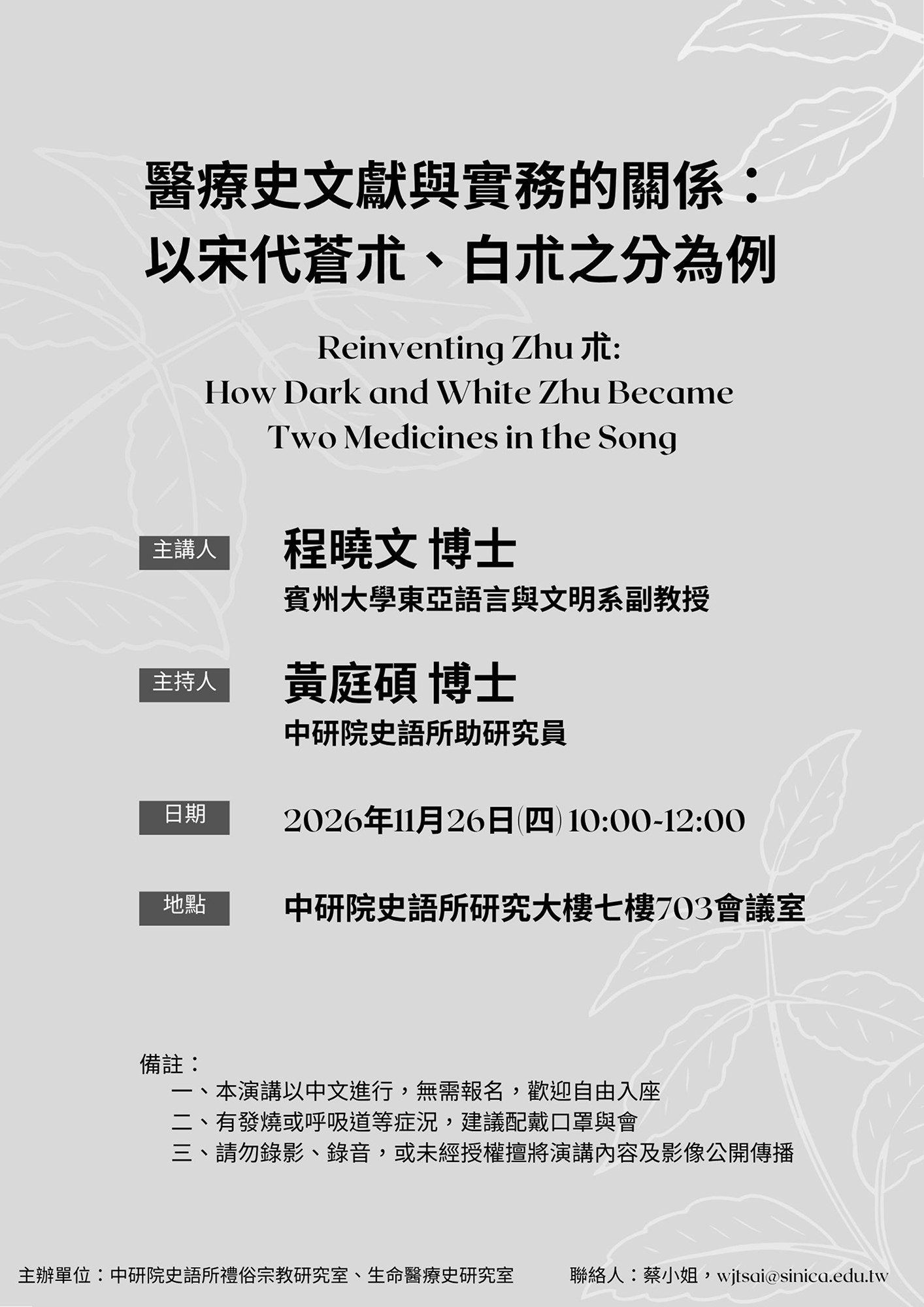
Speakers: Dr. Hsiao-wen Cheng (Associate Professor, Department of East Asian Languages and Civilizations, University of Pennsylvania)
Topic: Reinventing Zhu 朮: How Dark and White Zhu Became Two Medicines in the Song
Moderator: Dr. Ting-shuo Huang (Assistant Research Fellow, IHP)
Date: Nov. 26 (Thu.), 2026, 10:00-12:00
Venue: Room 703, Research Building, IHP
❈ Organizer: Custom, Religion, and Daily Life Research Group and History of Health and Healing Research Group, IHP, Academia Sinica
Contact: Ms. Tsai, wjtsai@sinica.edu.tw
Abstract
Zhu is the rhizome of a group of flowering plants indigenous to East Asia that belong to the Atractylodes genus. Today, Chinese medicine recognizes two kinds of zhu: cangzhu (dark zhu) and baizhu (white zhu). The two are not medicinally interchangeable, nor are they used together in one recipe. It is common knowledge that the sharp distinction between cangzhu and baizhu only emerged during the Song dynasty (960–1279). But why? What does the sudden emergence of such a sharp distinction in the late tenth century tell us about medical knowledge and practice during the Song dynasty? Song sources show that the meticulous effort of distinguishing baizhu and cangzhu was initially a textual one, carried out by government-commissioned editors. Nevertheless, the textual and historical investigation was deeply intertwined with concurrent practice on the ground. On the one hand, state-sponsored publications had the privilege of a near-monopoly over access to historical texts. On the other hand, however, a careful comparison of Song and pre-Song zhu recipes shows significant medical innovations in the usage of dark zhu in the eleventh and twelfth centuries. A micro-history of zhu, and especially of dark zhu, presents a unique window into the relationship between medical texts and practice in mid-imperial China and the significance of medicinal materiality.
Lastest Events
-
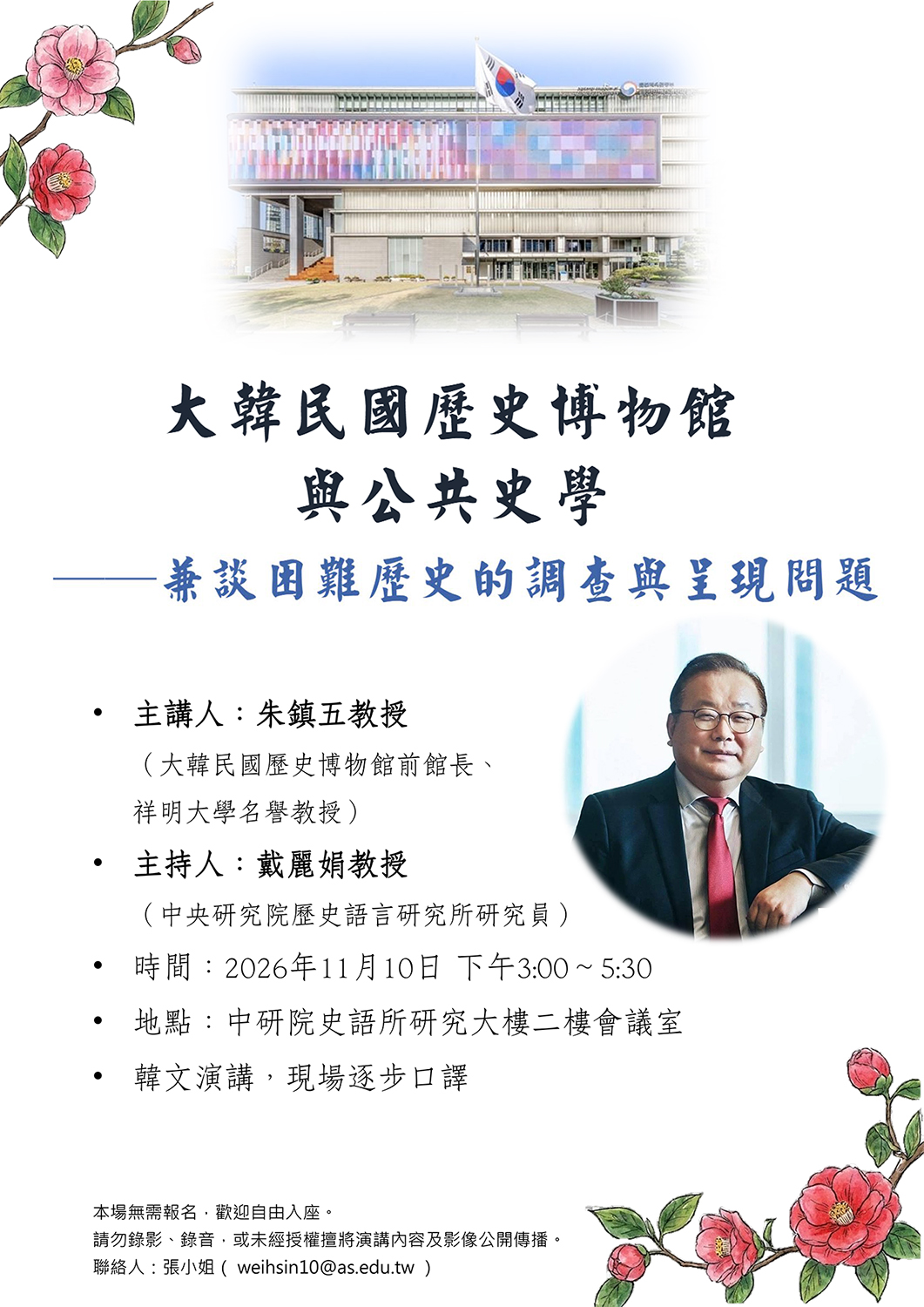
Speaker朱鎮五
The National Museum of Korean Contemporary History and Public History: With a Focus on the Investigation and Presentation of Difficult Histories
Time2026-11-10
Location研究大樓2F會議室
-
Speaker
The Taste of Time: Interdisciplinary Approaches to Fermented Food
Time2026-11-11
Location文物館B1演講廳
-
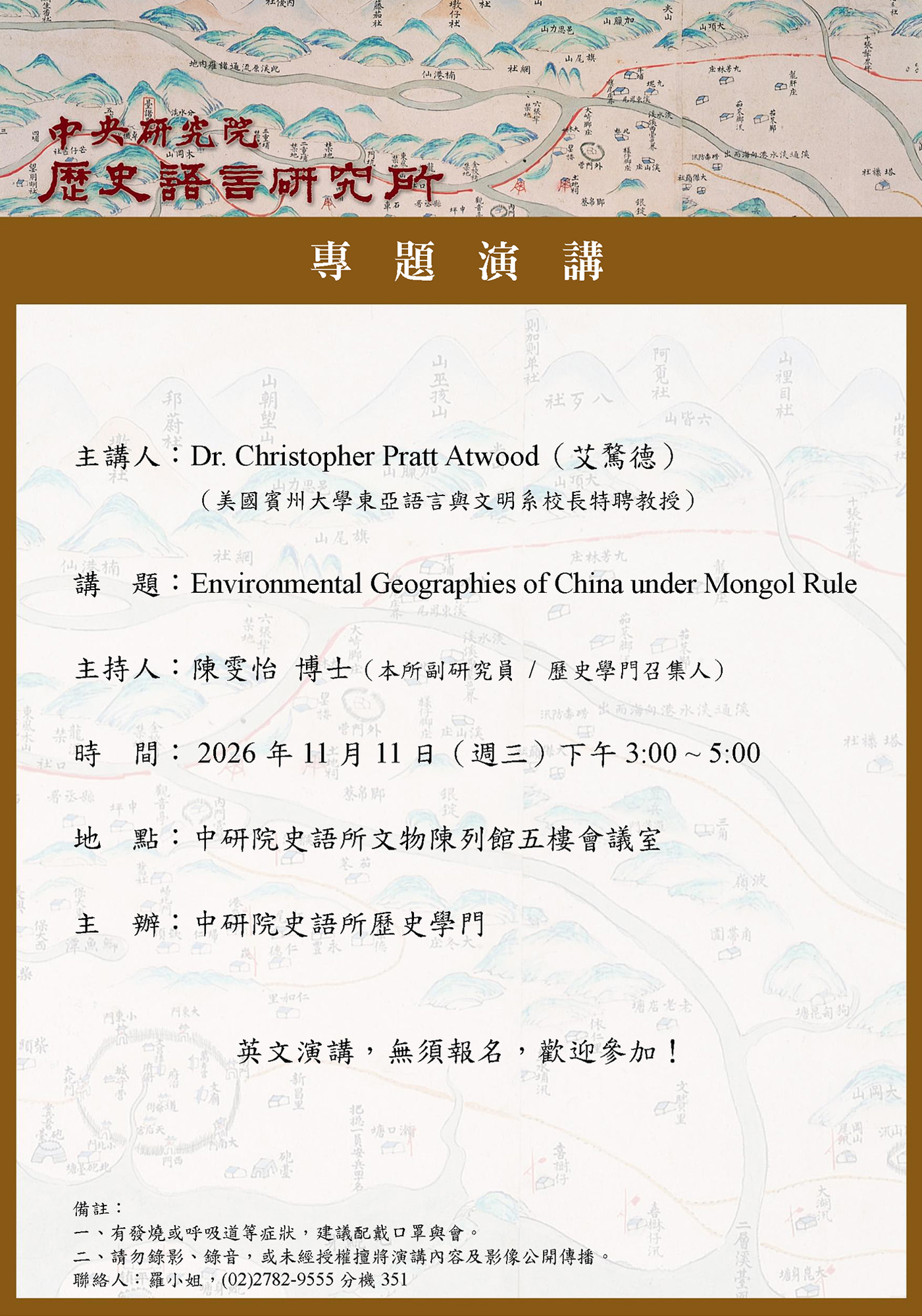
SpeakerChristopher Pratt Atwood
Environmental Geographies of China under Mongol Rule
Time2026-11-11
Location文物館5F會議室
-
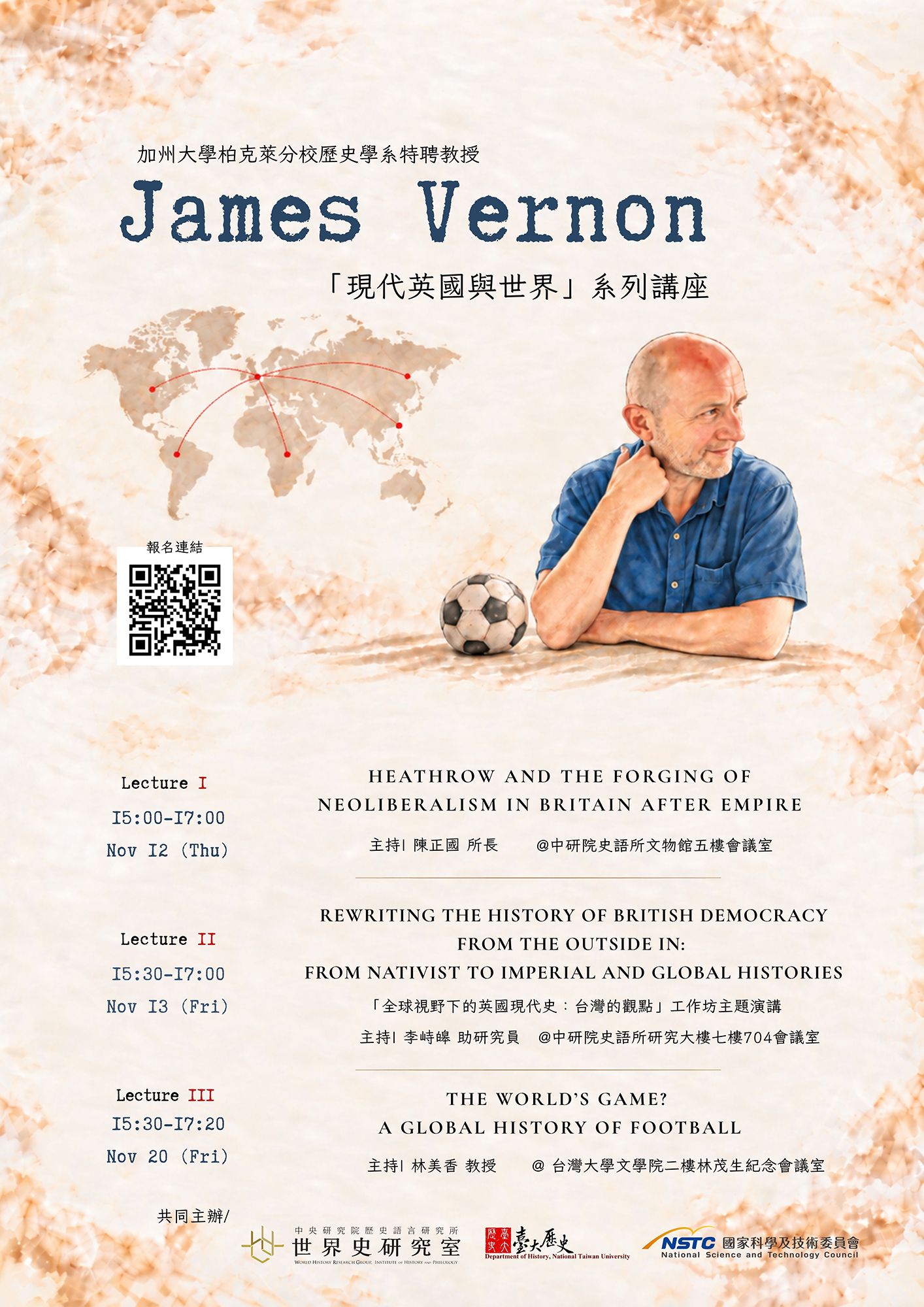
SpeakerJames Vernon
Heathrow and the Forging of Neoliberalism in Britain after Empire
Time2026-11-12
Location文物館5F會議室
-
.jpg)
Speaker
Global History and Modern Britain: Taiwan’s Perspective
Time2026-11-13
Location研究大樓704室
-
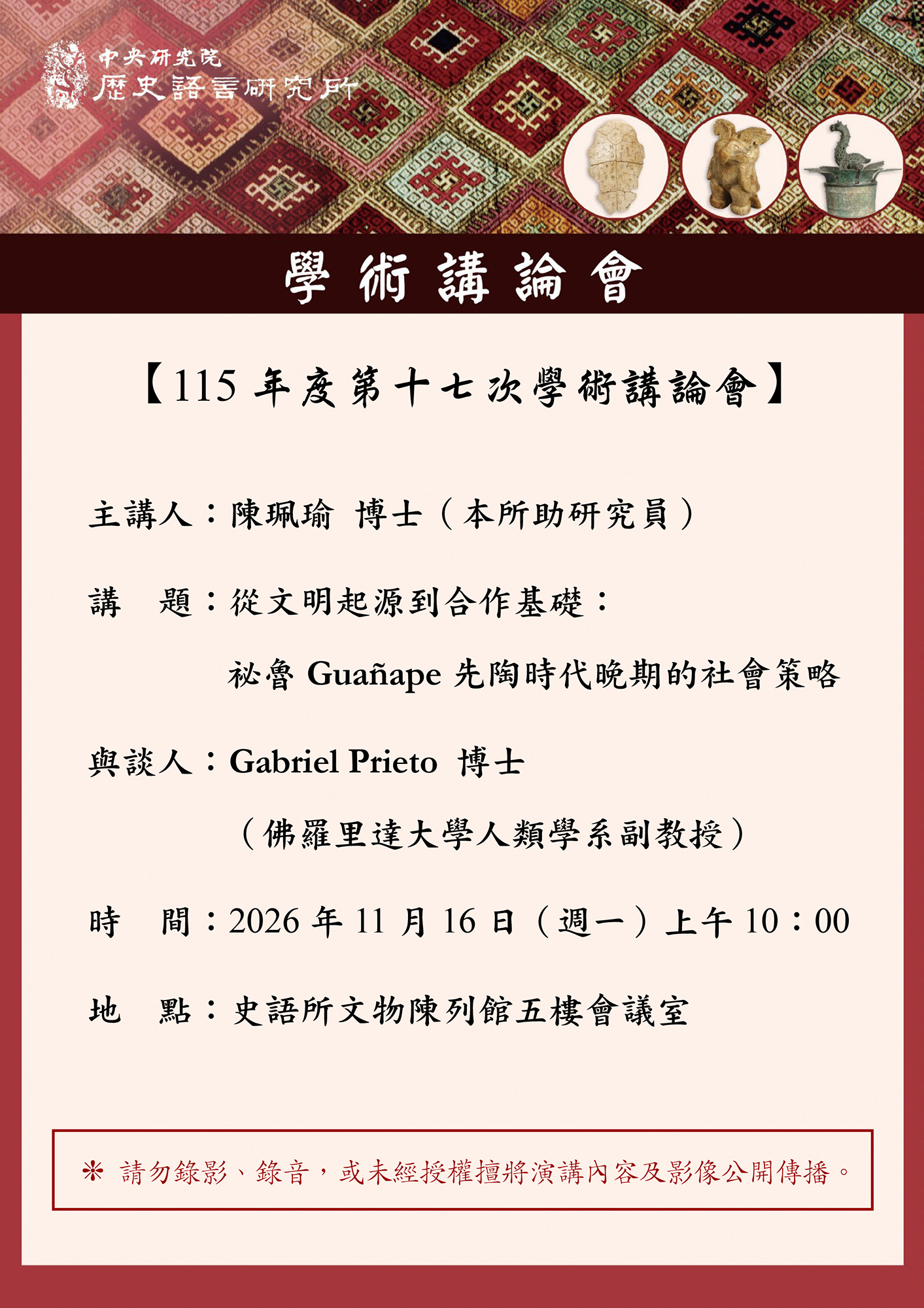
Speaker陳珮瑜
Foundation of Civilization? Foundation of Cooperation: Alternative Social Strategies in the Late Preceramic Guañape Area, Virú Valley
Time2026-11-16
Location文物館5F會議室
-
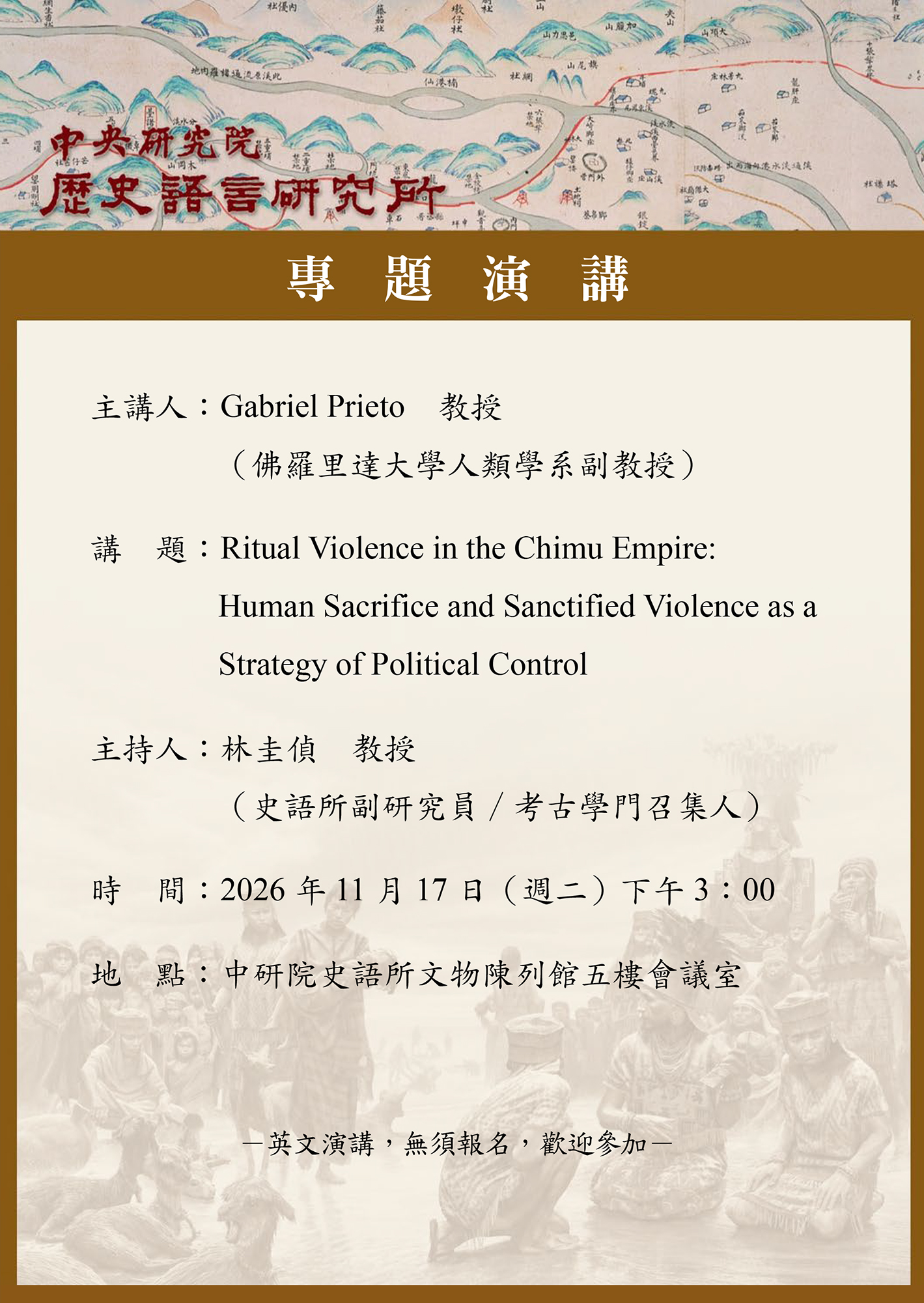
SpeakerGabriel Prieto
Ritual Violence in the Chimu Empire: Human Sacrifice and Sanctified Violence as a Strategy of Political Control
Time2026-11-17
Location文物館5F會議室
-
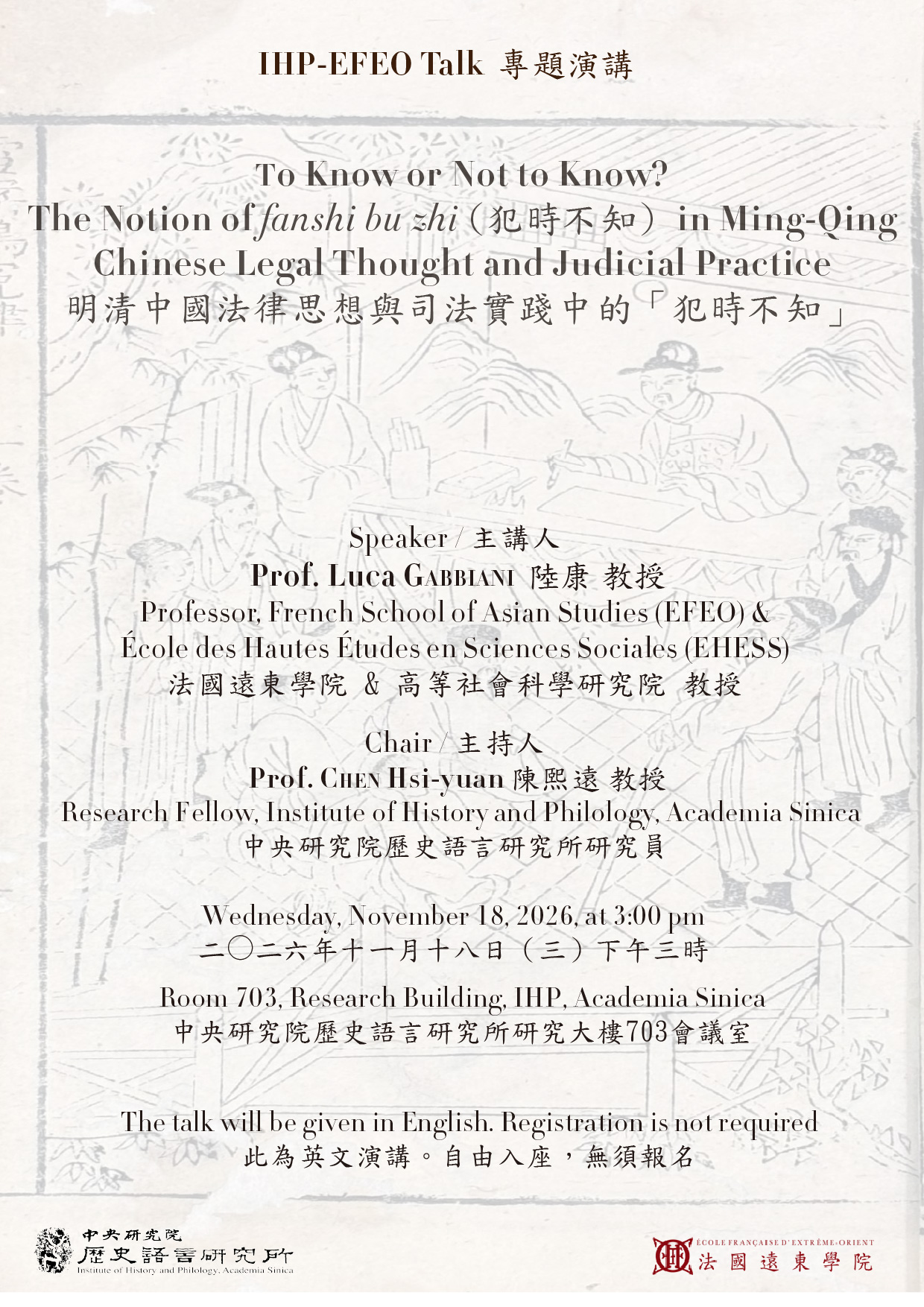
SpeakerLuca GABBIANI
To Know or Not to Know? The Notion of fanshi bu zhi (犯時不知) in Ming-Qing Chinese Legal Thought and Judicial Practice
Time2026-11-18
Location研究大樓703室
-
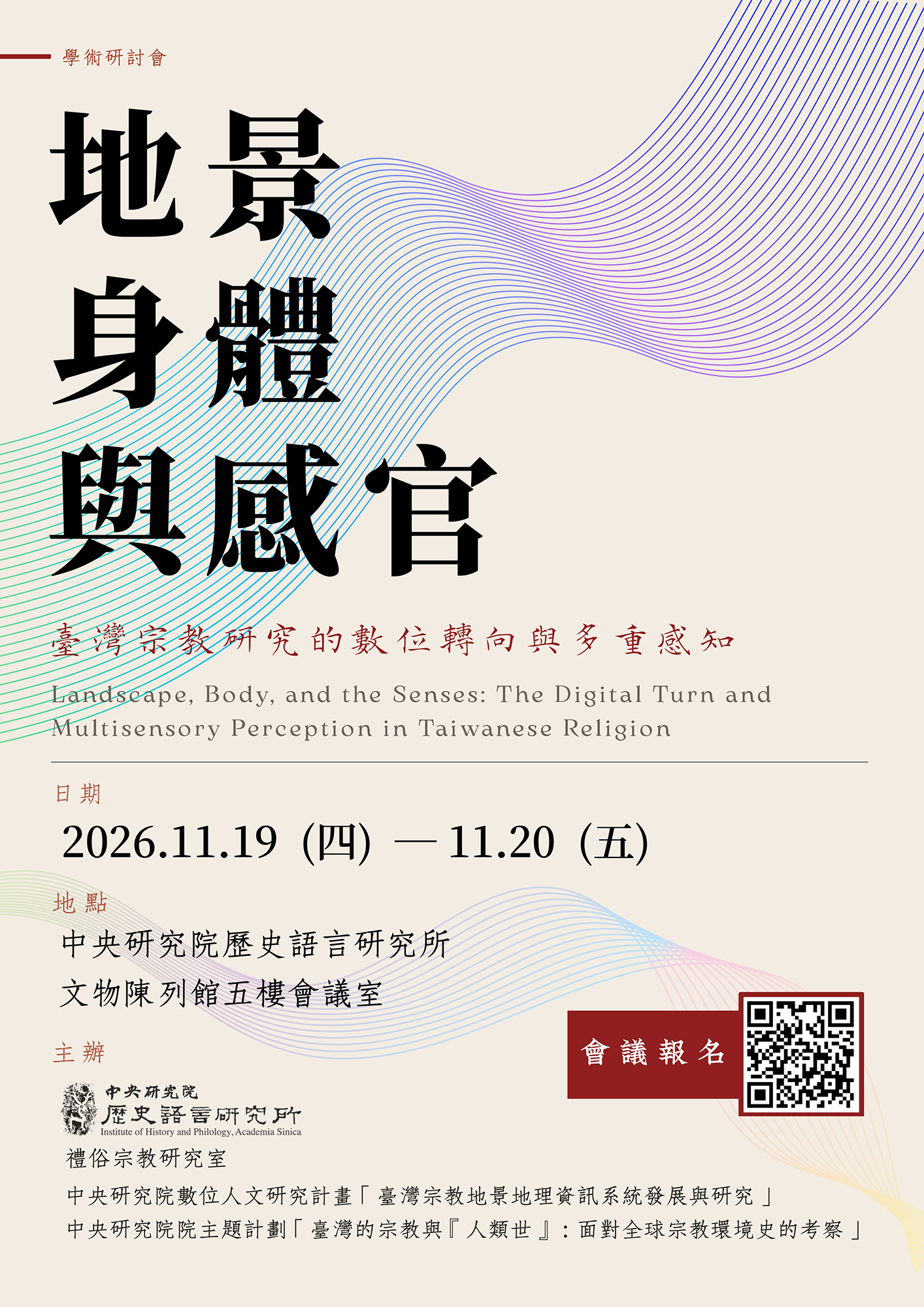
Speaker
Landscape, Body, and the Senses: The Digital Turn and Multisensory Perception in Taiwanese Religion
Time2026-11-19
Location文物館5F會議室
-
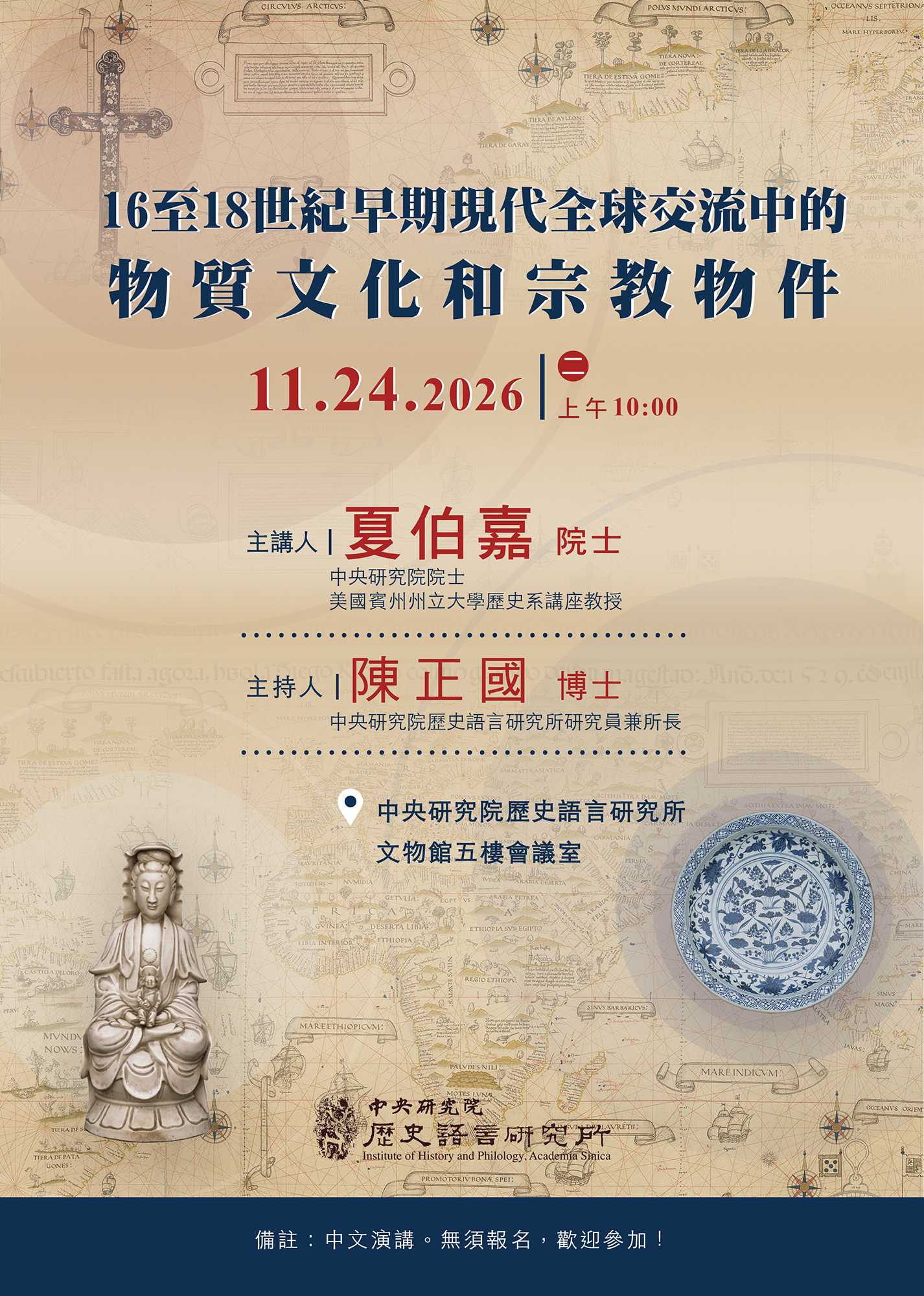
Speaker夏伯嘉
Material Culture and Religious Objects in Early Modern Global Exchange, 16th to 18th Centuries
Time2026-11-24
Location文物館5F會議室
-
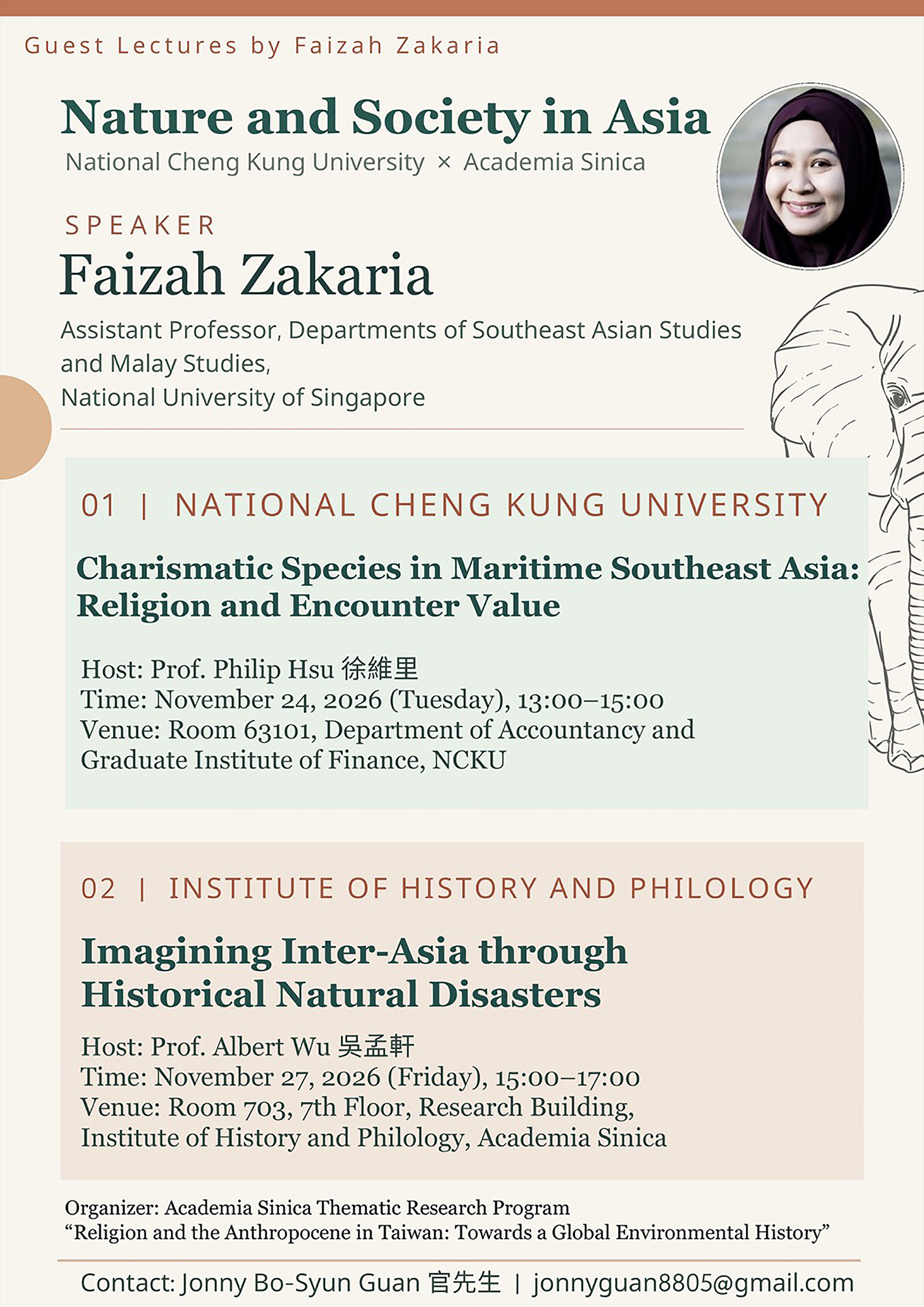
SpeakerFaizah Zakaria
Prof. Faizah Zakaria’s Lecture Series in Taiwan
Time2026-11-27
Location研究大樓703室
-
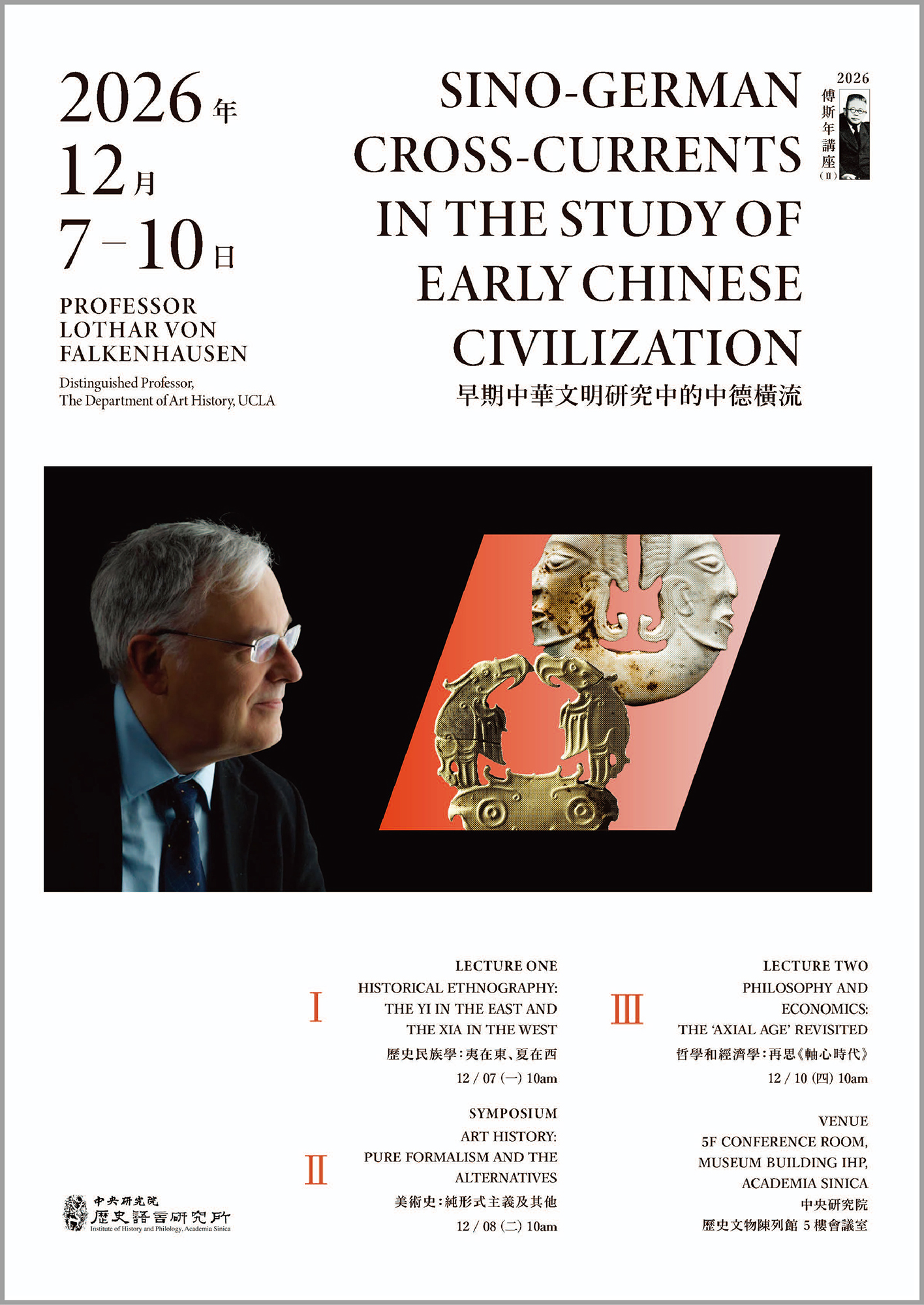
SpeakerLothar von Falkenhausen
Sino-German Cross-Currents in the Study of Early Chinese Civilization
Time2026-12-07
Location文物館5F會議室


