
醫療史文獻與實務的關係:以宋代蒼朮、白朮之分為例
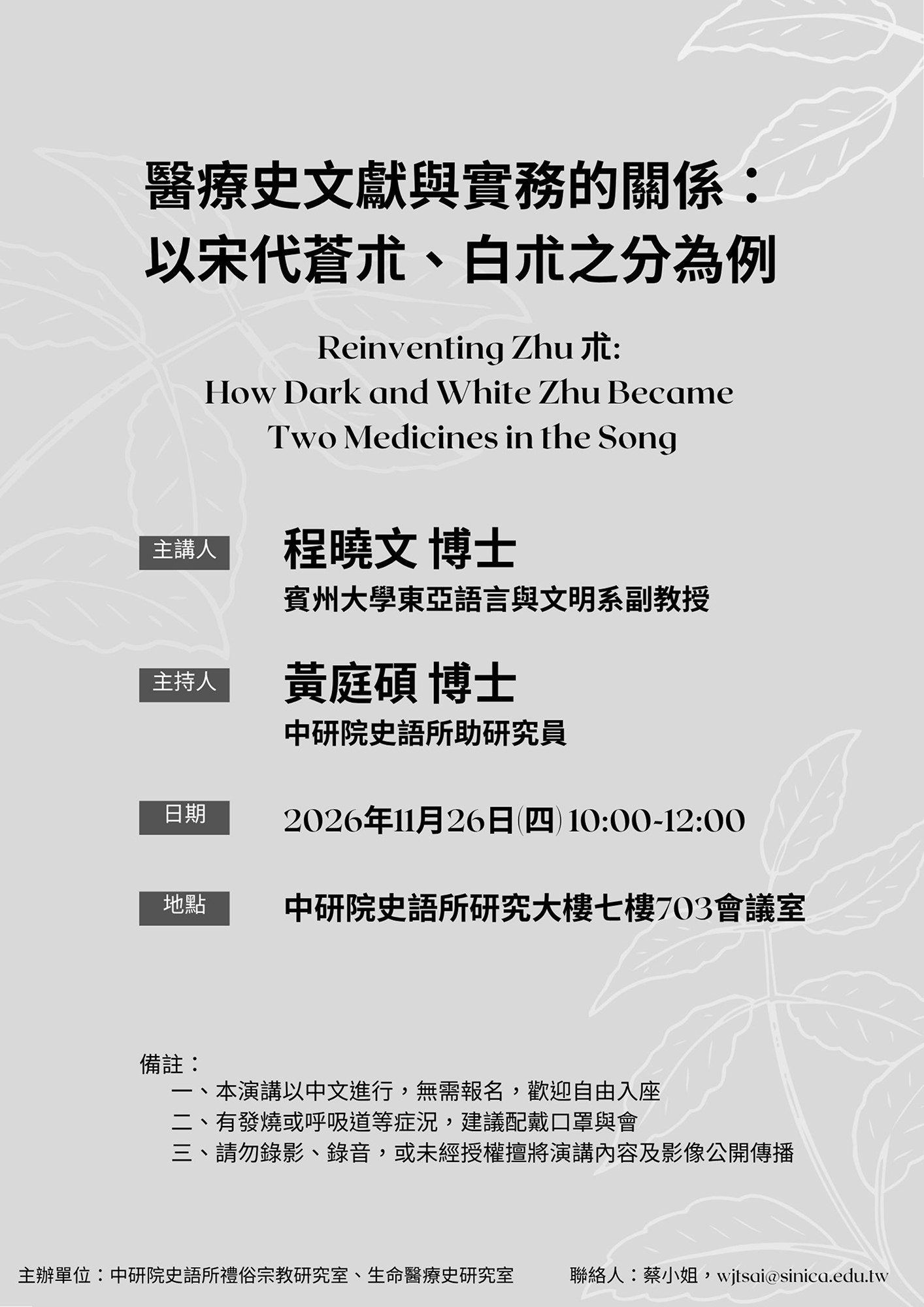
主講人:程曉文 博士(美國賓州大學東亞語言與文明系副教授)
講 題:醫療史文獻與實務的關係:以宋代蒼朮、白朮之分為例
主持人:黃庭碩 博士(本所助研究員)
時 間:2026年11月26日(四) 10:00-12:00
地 點:本所研究大樓七樓703會議室
主辦單位:中研院史語所禮俗宗教研究室、中研院史語所生命醫療史研究室
聯絡資訊: 蔡小姐,wjtsai@sinica.edu.tw
摘要
Zhu is the rhizome of a group of flowering plants indigenous to East Asia that belong to the Atractylodes genus. Today, Chinese medicine recognizes two kinds of zhu: cangzhu (dark zhu) and baizhu (white zhu). The two are not medicinally interchangeable, nor are they used together in one recipe. It is common knowledge that the sharp distinction between cangzhu and baizhu only emerged during the Song dynasty (960–1279). But why? What does the sudden emergence of such a sharp distinction in the late tenth century tell us about medical knowledge and practice during the Song dynasty? Song sources show that the meticulous effort of distinguishing baizhu and cangzhu was initially a textual one, carried out by government-commissioned editors. Nevertheless, the textual and historical investigation was deeply intertwined with concurrent practice on the ground. On the one hand, state-sponsored publications had the privilege of a near-monopoly over access to historical texts. On the other hand, however, a careful comparison of Song and pre-Song zhu recipes shows significant medical innovations in the usage of dark zhu in the eleventh and twelfth centuries. A micro-history of zhu, and especially of dark zhu, presents a unique window into the relationship between medical texts and practice in mid-imperial China and the significance of medicinal materiality.
近期學術活動
-
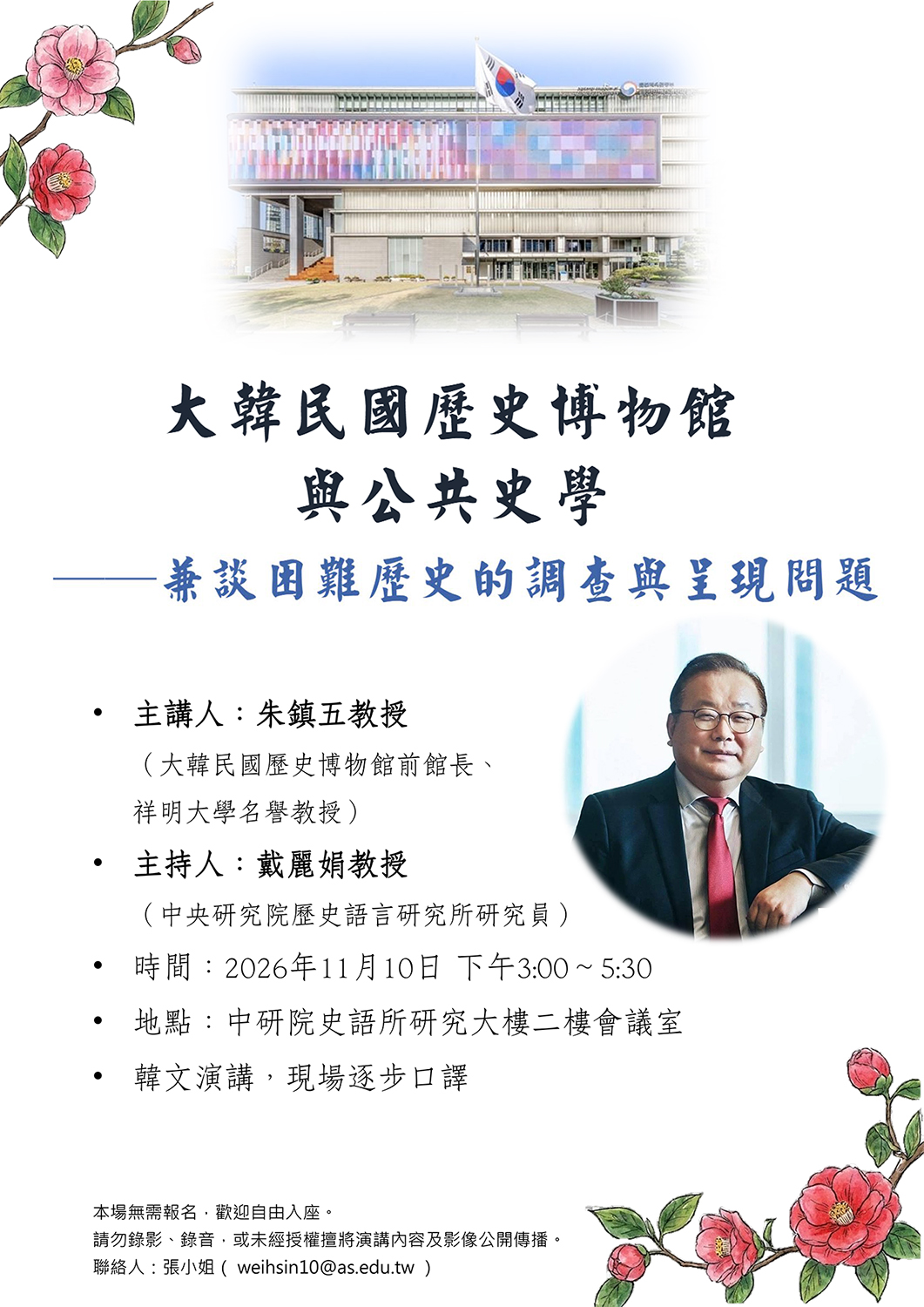
講者朱鎮五
大韓民國歷史博物館與公共史學──兼談困難歷史的調查與呈現問題
時間2026-11-10
地點研究大樓2F會議室
-
講者
時間的風味:發酵食物的跨域研究
時間2026-11-11
地點文物館B1演講廳
-
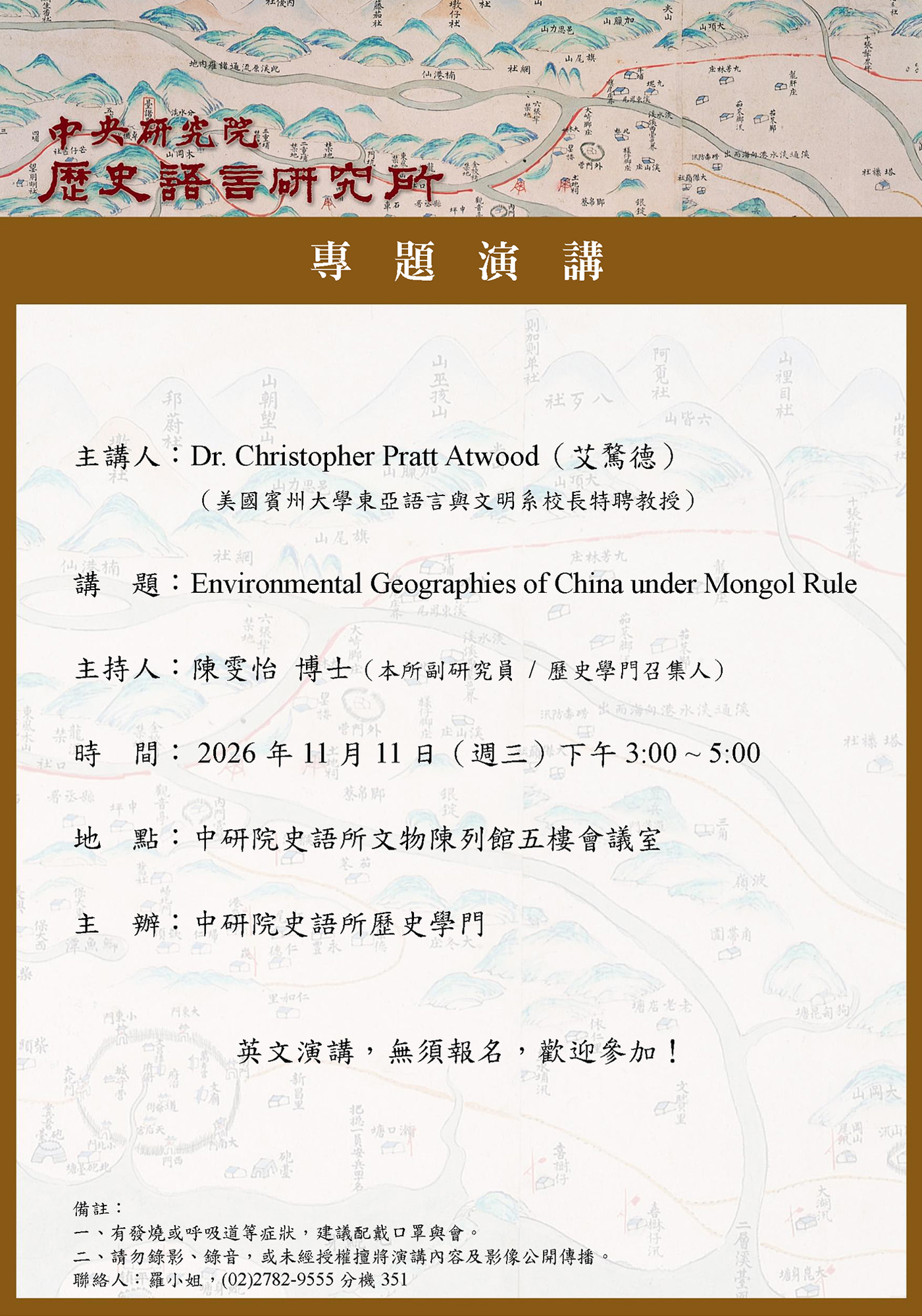
講者Christopher Pratt Atwood
Environmental Geographies of China under Mongol Rule
時間2026-11-11
地點文物館5F會議室
-
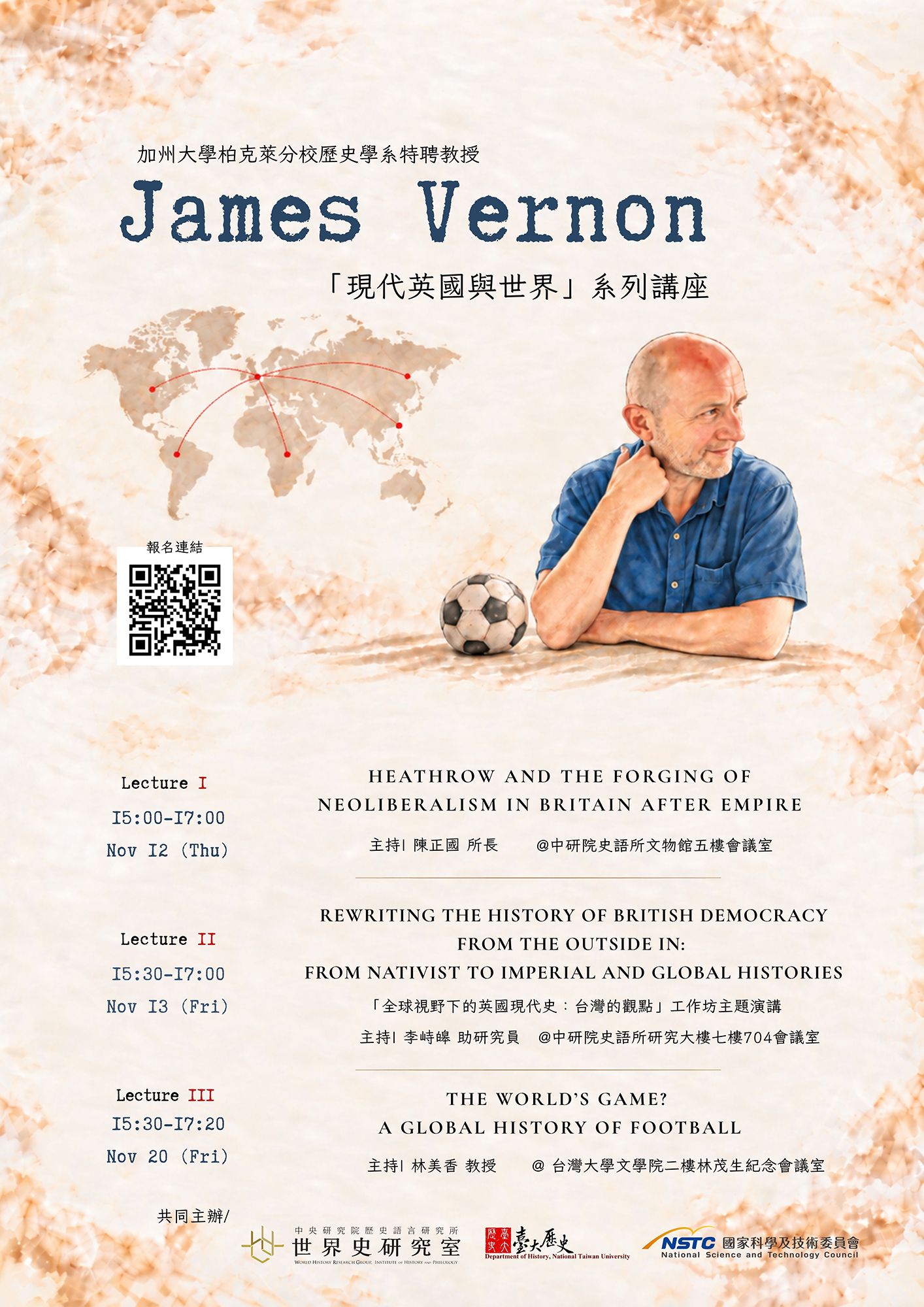
講者James Vernon
Heathrow and the Forging of Neoliberalism in Britain after Empire
時間2026-11-12
地點文物館5F會議室
-
.jpg)
講者
「全球視野下的英國現代史:台灣的觀點」工作坊
時間2026-11-13
地點研究大樓704室
-
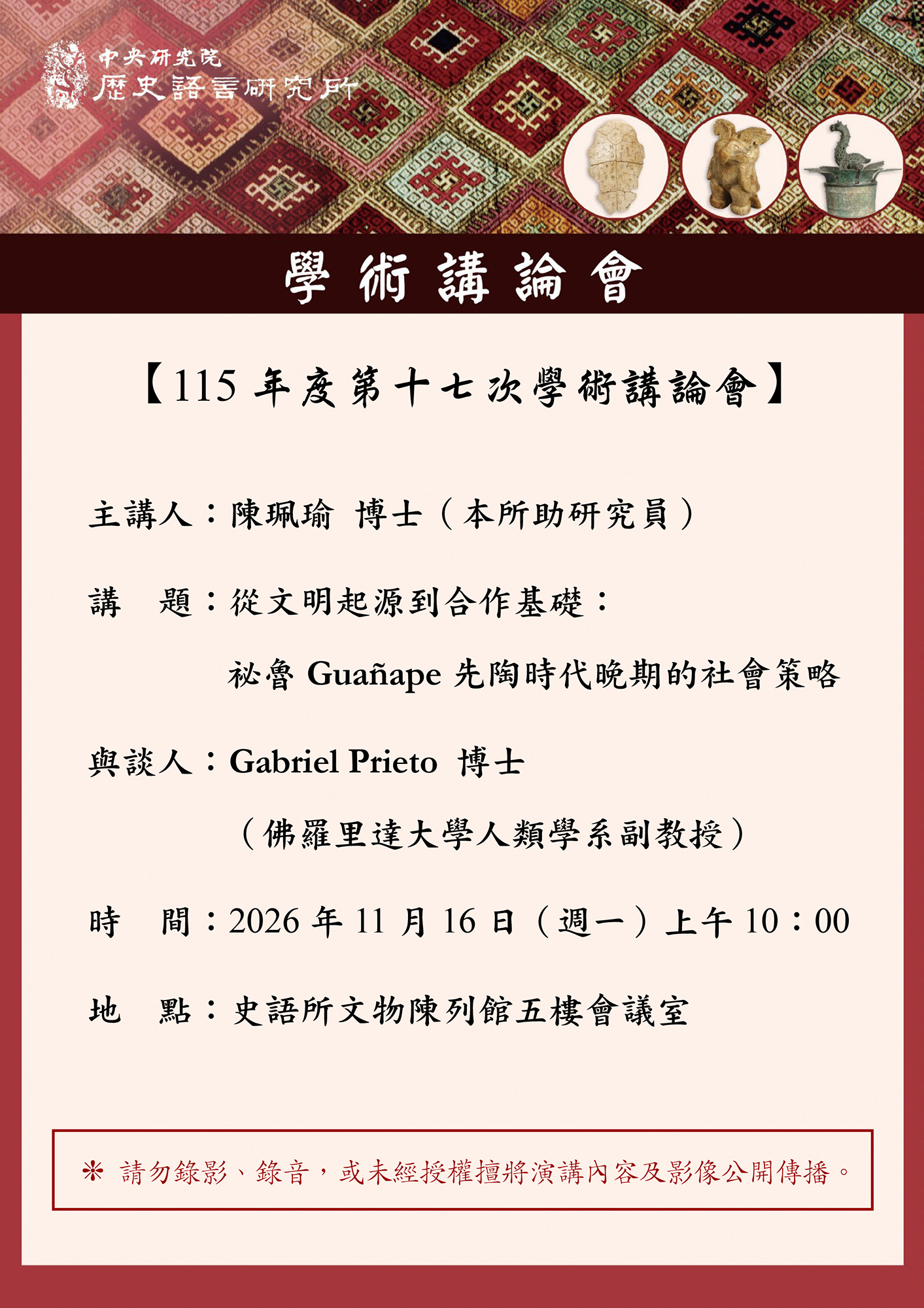
講者陳珮瑜
從文明起源到合作基礎:祕魯 Guañape先陶時代晚期的社會策略
時間2026-11-16
地點文物館5F會議室
-
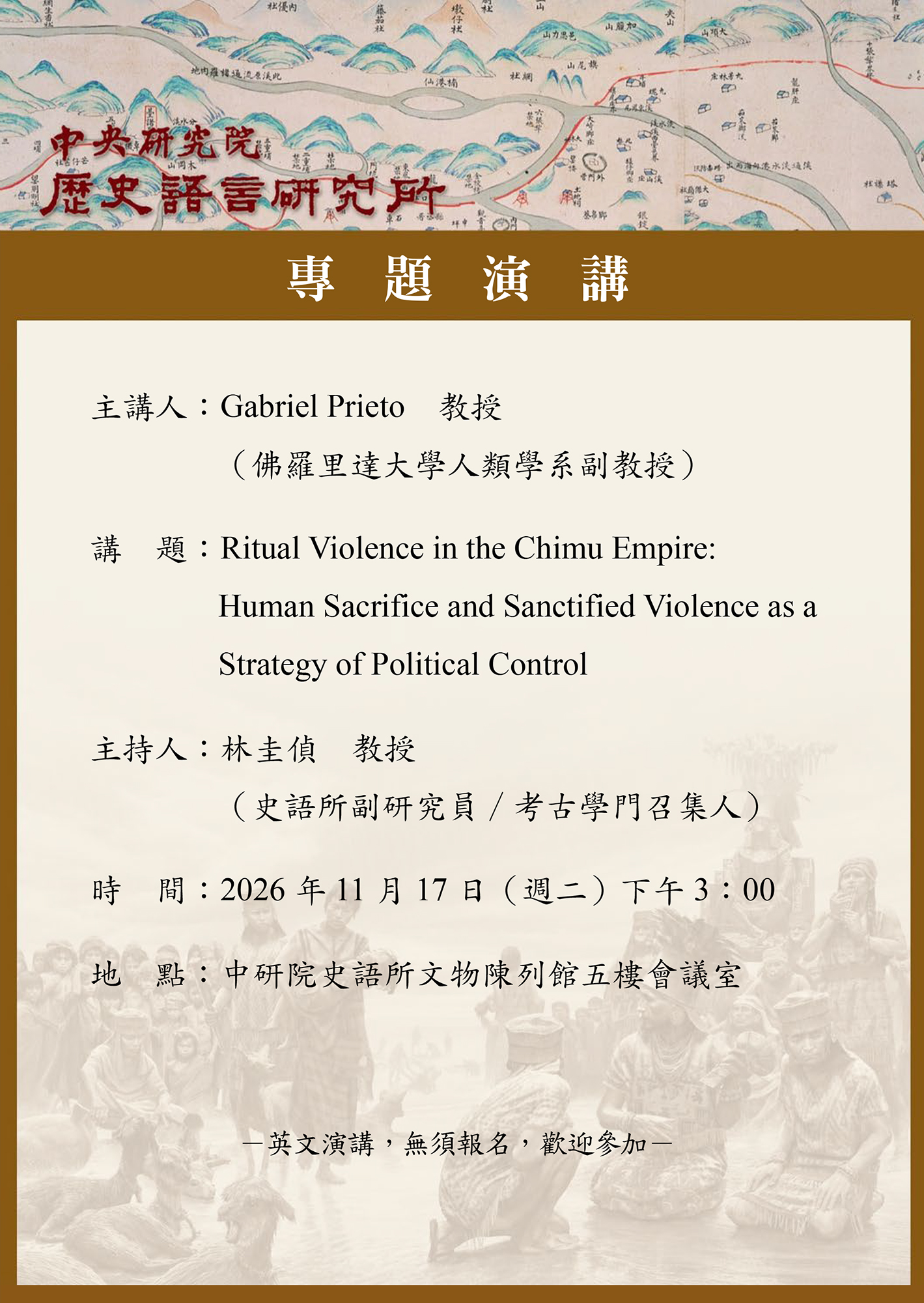
講者Gabriel Prieto
Ritual Violence in the Chimu Empire: Human Sacrifice and Sanctified Violence as a Strategy of Political Control
時間2026-11-17
地點文物館5F會議室
-
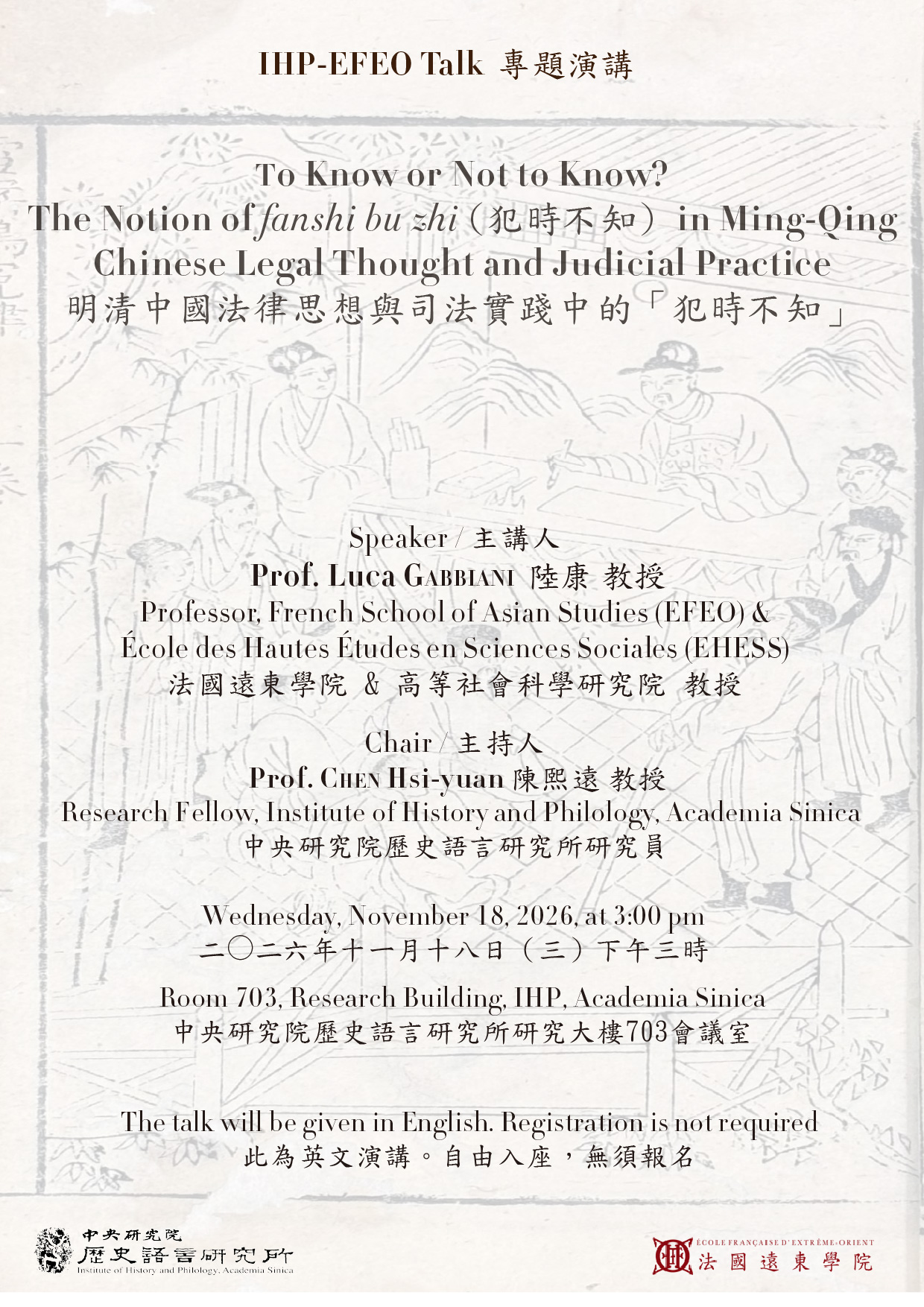
講者Luca GABBIANI
明清中國法律思想與司法實踐中的「犯時不知」
時間2026-11-18
地點研究大樓703室
-
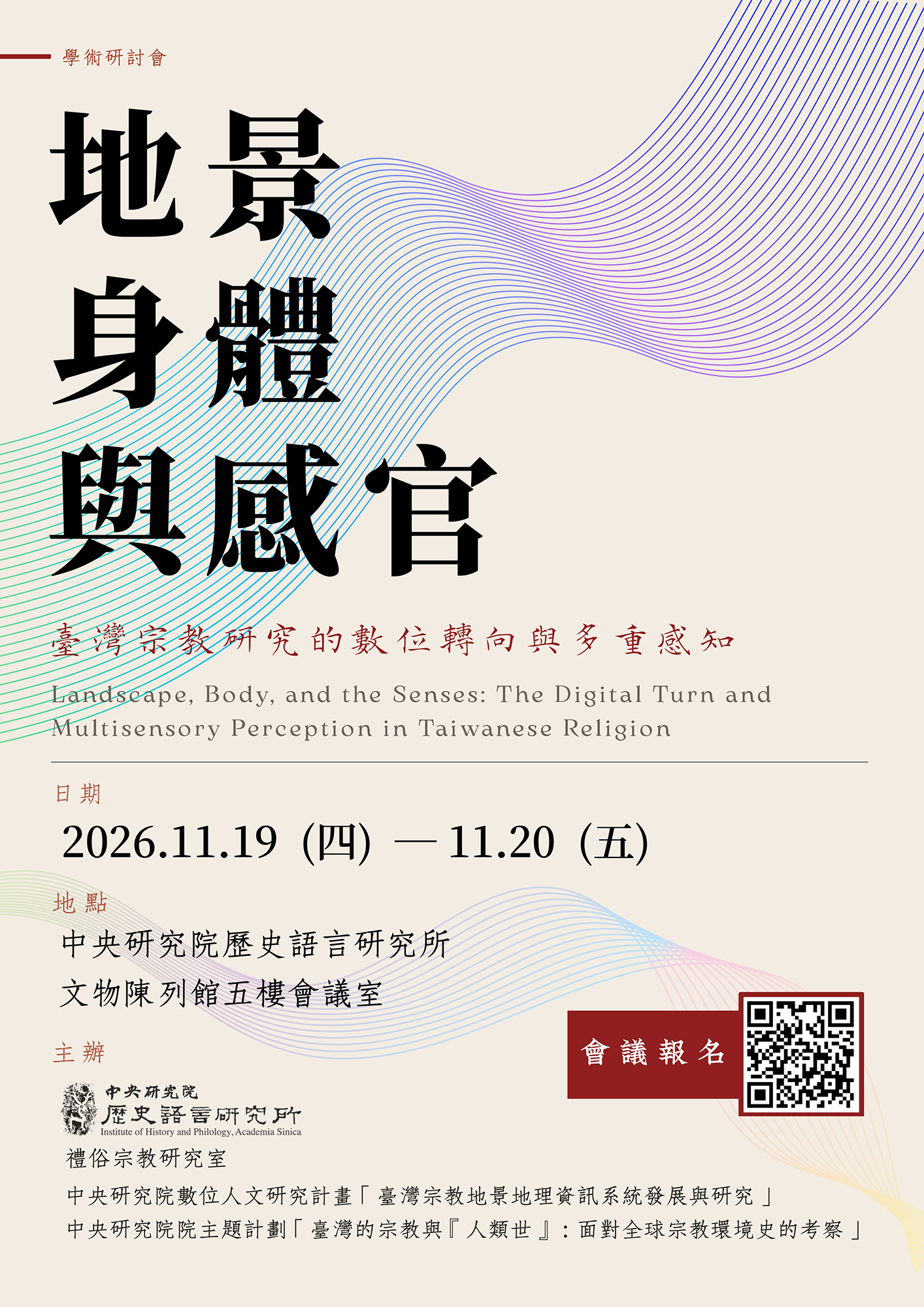
講者
「地景、身體與感官:臺灣宗教研究的數位轉向與多重感知」學術研討會
時間2026-11-19
地點文物館5F會議室
-
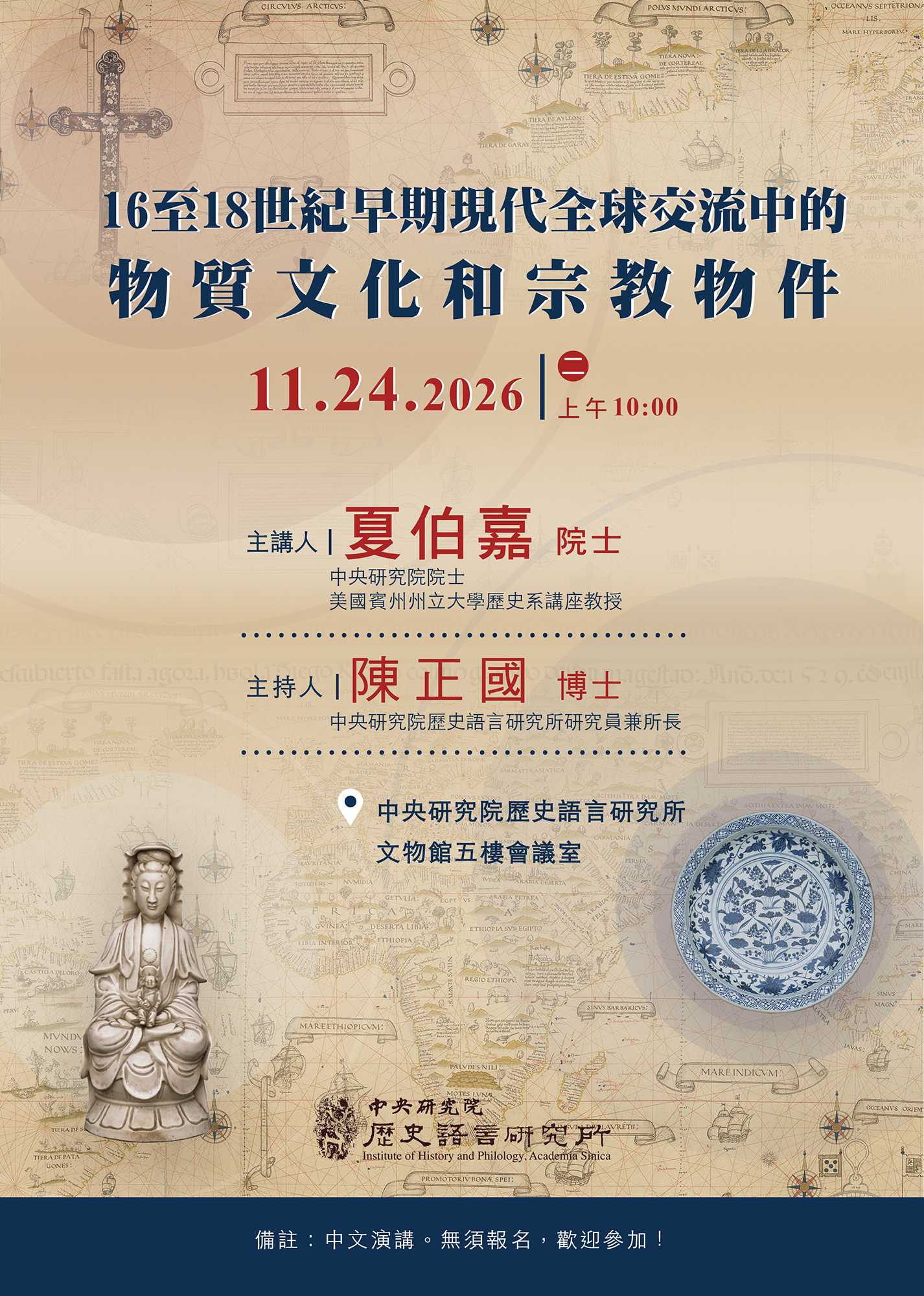
講者夏伯嘉
16至18世紀早期現代全球交流中的物質文化和宗教物件
時間2026-11-24
地點文物館5F會議室
-
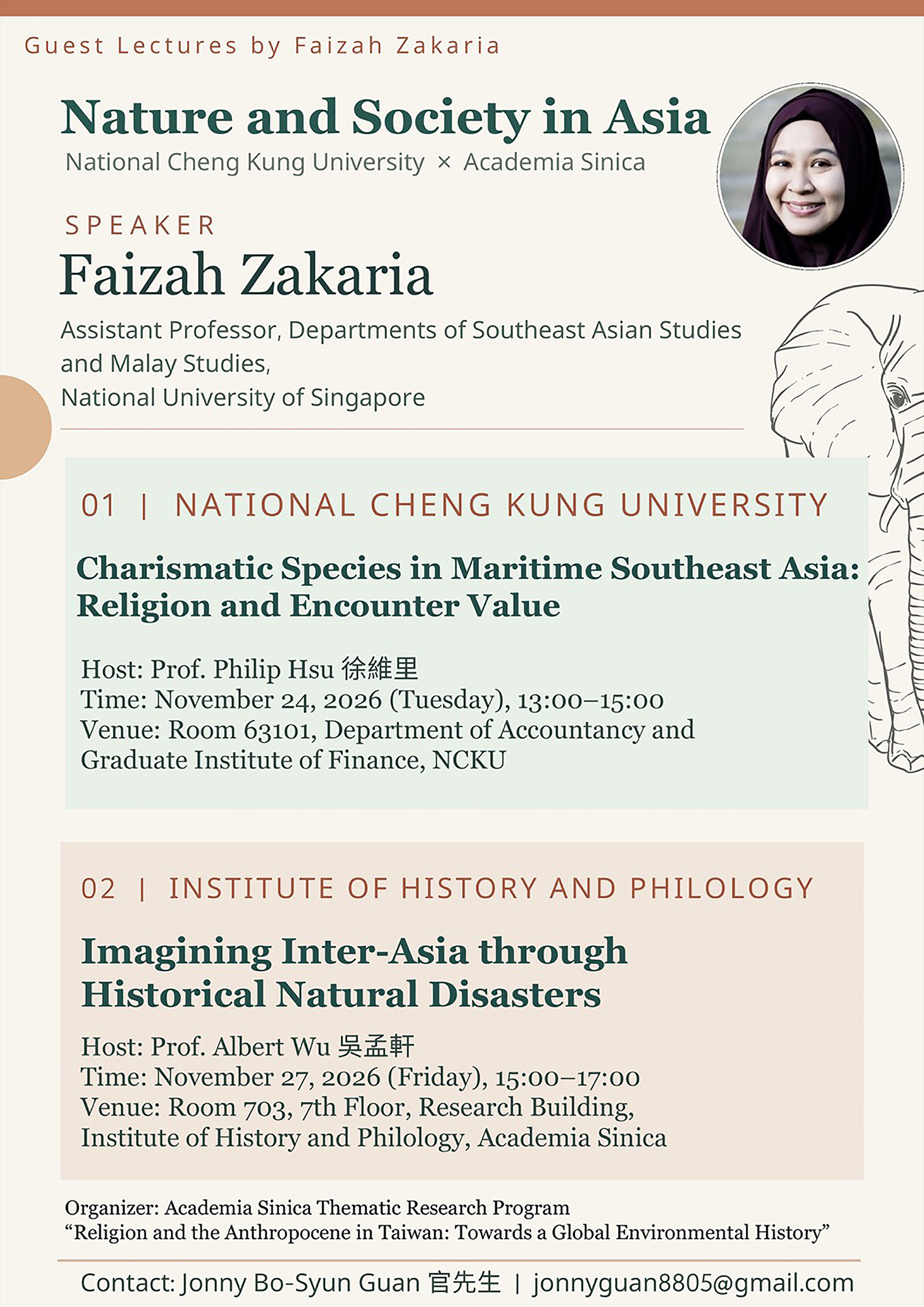
講者Faizah Zakaria
Faizah Zakaria教授訪臺系列演講
時間2026-11-27
地點研究大樓703室
-
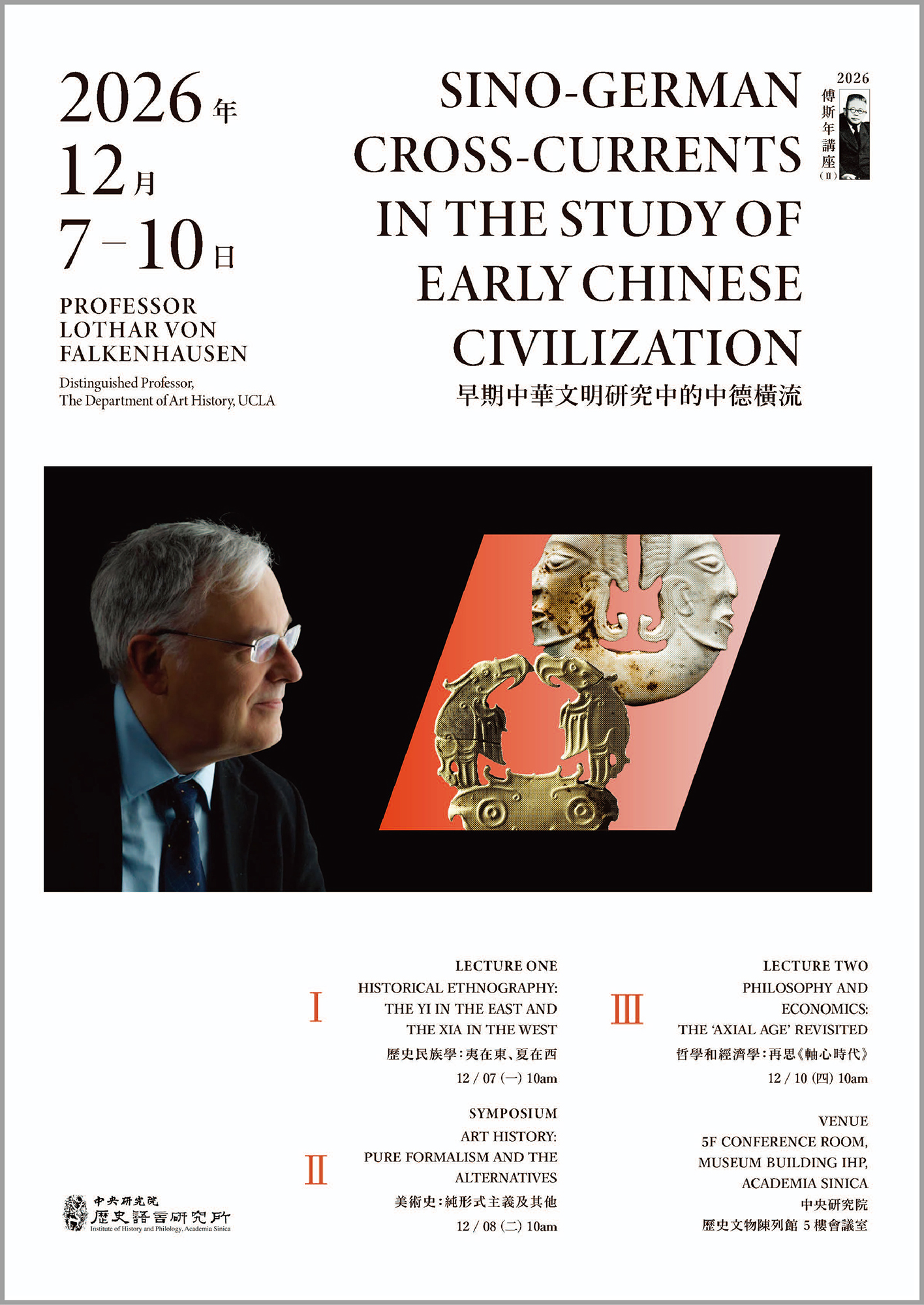
講者Lothar von Falkenhausen
早期中華文明研究中的中德橫流
時間2026-12-07
地點文物館5F會議室