
Jesuit Science and Geography in Early Modern China
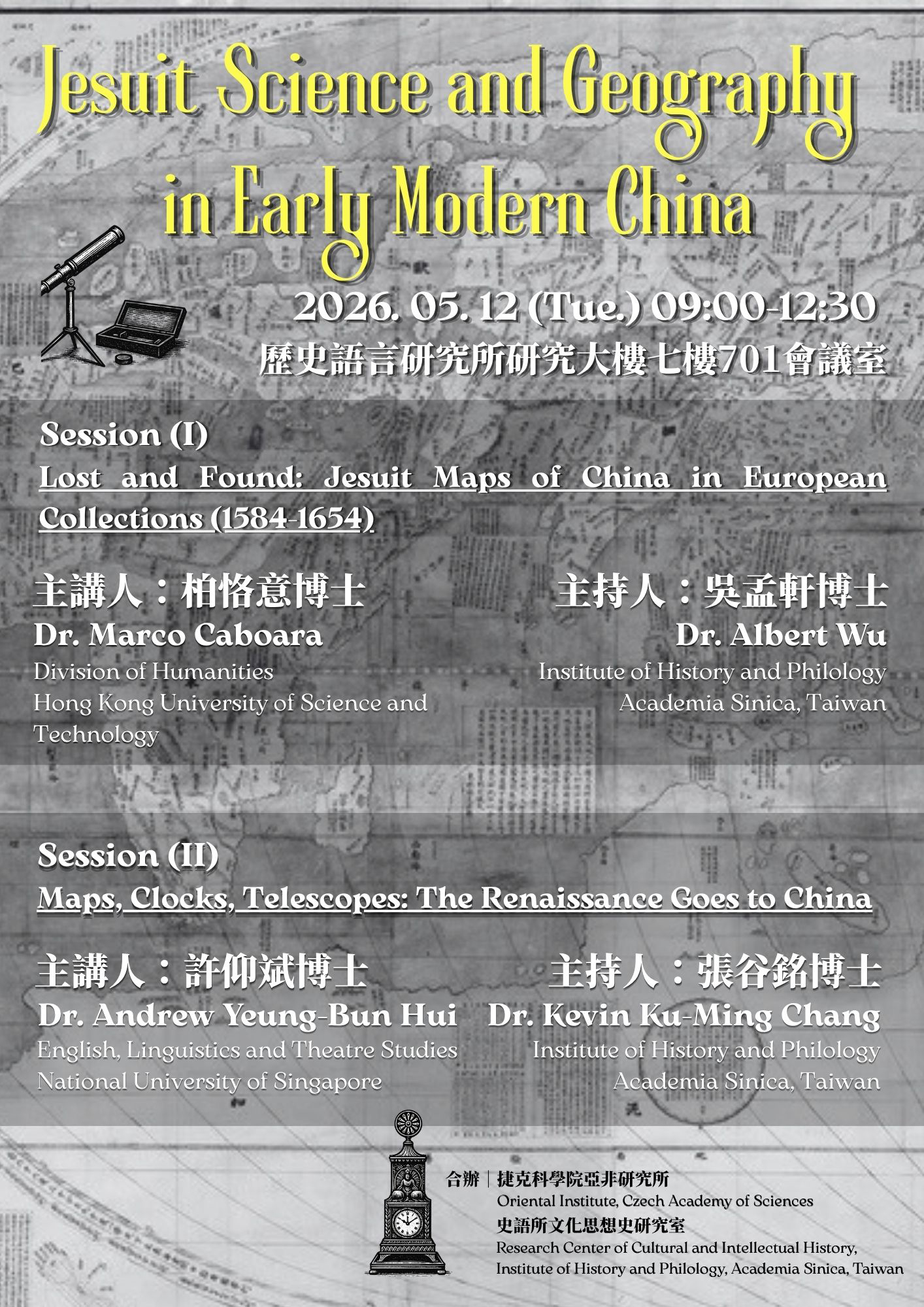
Speaker: Dr. Marco Caboara (Hong Kong University of Science and Technology); Dr. Andrew Hui (Department of English, Linguistics, and Theatre Studies, National University of Singapore)
Moderator: Ku-Ming (Kevin) Chang (Associate Research Fellow, IHP, Academia Sinica, Taiwan)
Time: May 12th (Tuesday), 09:00-12:30
Venue: Room 701, 7th Floor, IHP Research Hall
Organizer: Oriental Institute, Czech Academy of Science; Research Center of Cultural and Intellectual History, IHP, Academia Sinica, Taiwan
Contact: Research Center of Cultural and Intellectual History, cihasihp@gmail.com
Abstract:
Session (I) “Lost and Found: Jesuit Maps of China in European Collections (1584-1654)”
Based on recent explorations in European libraries and Archives, I will present newly discovered or rediscovered maps and globes with new depictions of China produced by Jesuit mapmakers and Italian cosmographers between the late 16th and the early 17th century, the formative period of the European cartographic image of China and East Asia.
Session (II) “The Renaissance Goes to China: Matteo Ricci’s Projects and Transformations”
In 1583, the Italian Jesuit Matteo Ricci went to China and stayed there for the rest of his life. He was one of the first missionaries to embark on the great impresa—“enterprise”—to save souls for the Kingdom of God. Unlike in the Americas, the Europeans arrived in Asia with neither an army nor a navy, so what was their form of persuasion? Classical philosophy, as it turns out.
What did he introduce to China, and what did China compelled him to invent? This talk explores how Ricci tapped into his humanist education in Rome in order to find strands of commonalities and resonances in both ancient Chinese and Greco-Roman thought. By the end of his life, Ricci translated—and transformed—a staggering amount of Western knowledge for his Chinese readers: geometry, Stoicism, dialogues, a treatise on friendship, astronomy, cartography. Although Ricci has been intensively studied by sinologists and specialists of the Jesuit mission, he remains oddly marginal to the history of ideas; this talk argues that his China project should be understood as a major, but unrecognized, experiment in global humanism. The Renaissance did go to China, but China also changed the Renaissance.
(This lecture will be given in English, and no prior registration is required.)
Lastest Events
-
Speaker
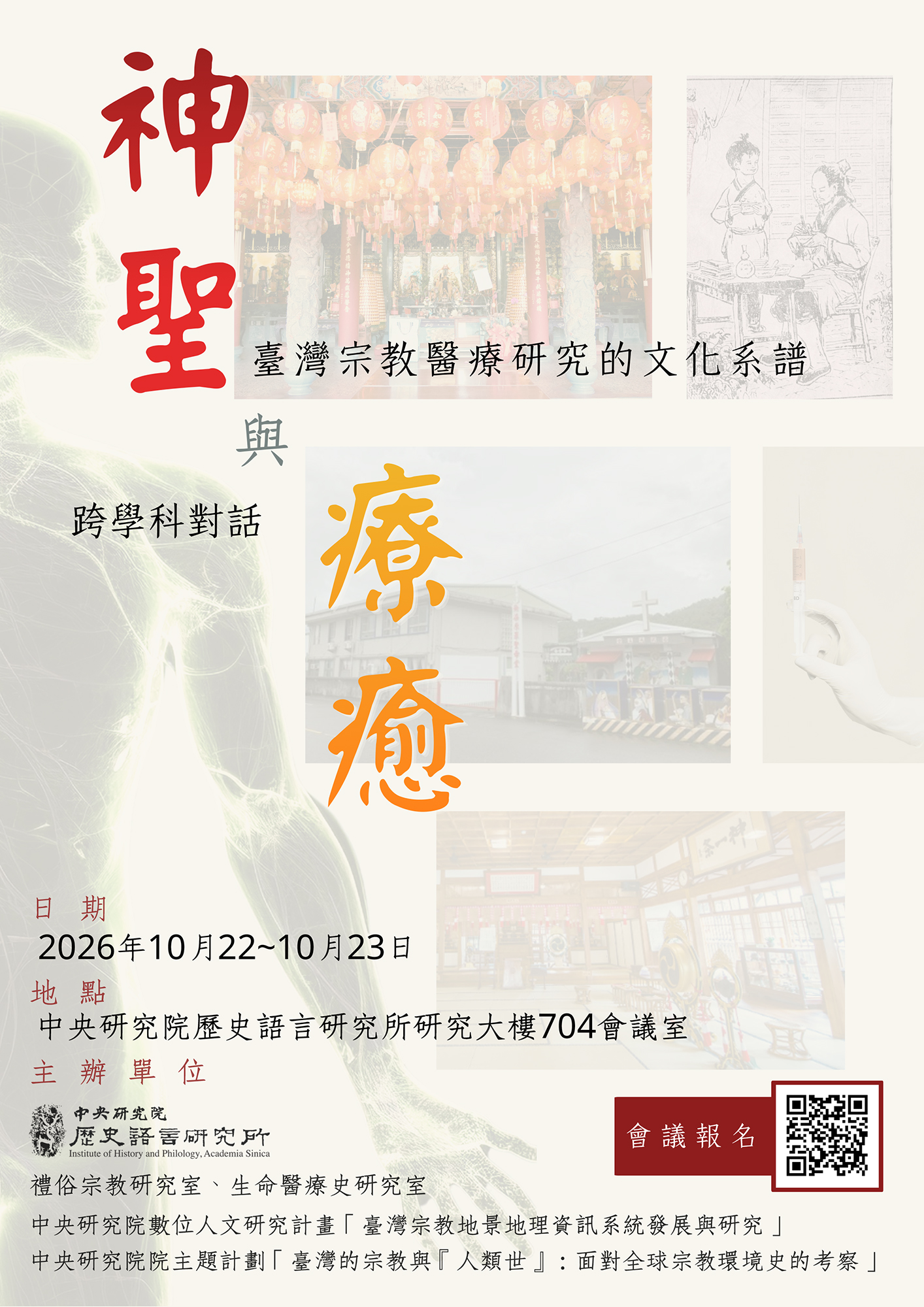
Healing and the Sacred: Cultural Genealogies and Interdisciplinary Dialogues in the Study of Religious Healing in Taiwan
Time2026-10-22
Location研究大樓704室
-
Speaker
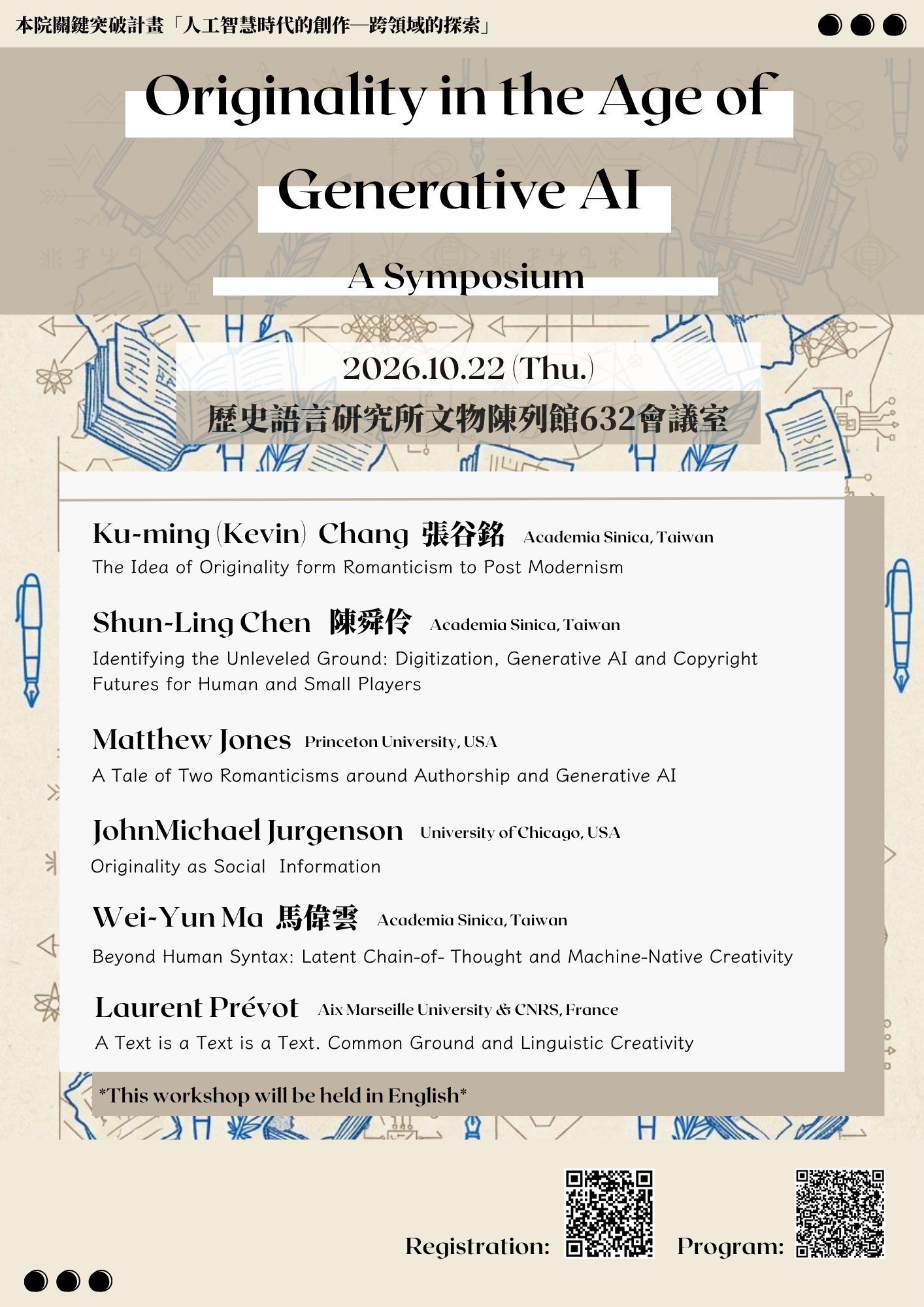
Originality in the Age of Generative AI: A Symposium
Time2026-10-22
Location文物館632會議室
-
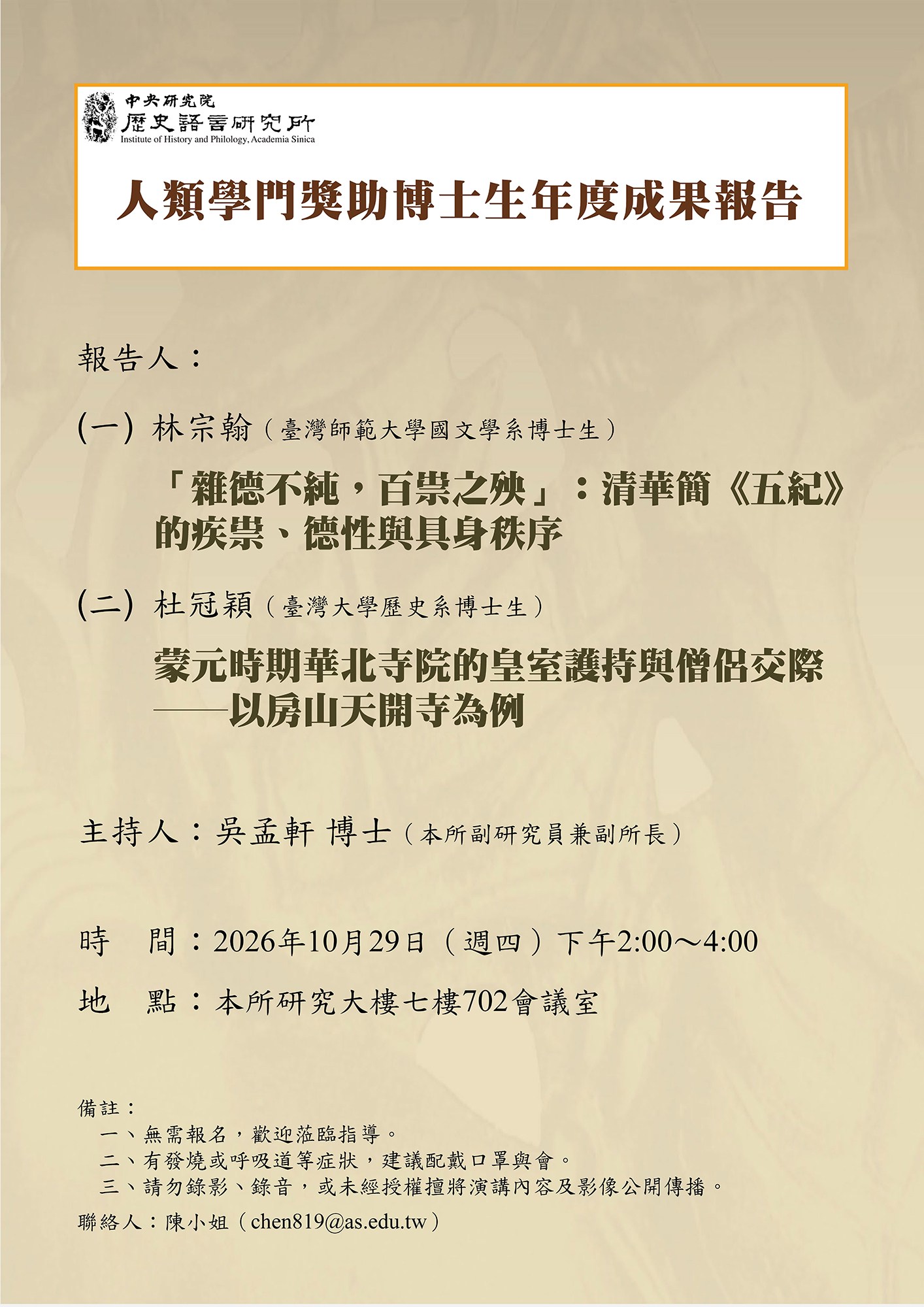
Speaker林宗翰、杜冠穎
Annual Final Presentation for Recipients of the PhD Scholarship in Anthropology
Time2026-10-29
Location研究大樓702室
-
Speaker
The Taste of Time: Interdisciplinary Approaches to Fermented Food
Time2026-11-11
Location文物館B1演講廳


