
Jesuit Science and Geography in Early Modern China
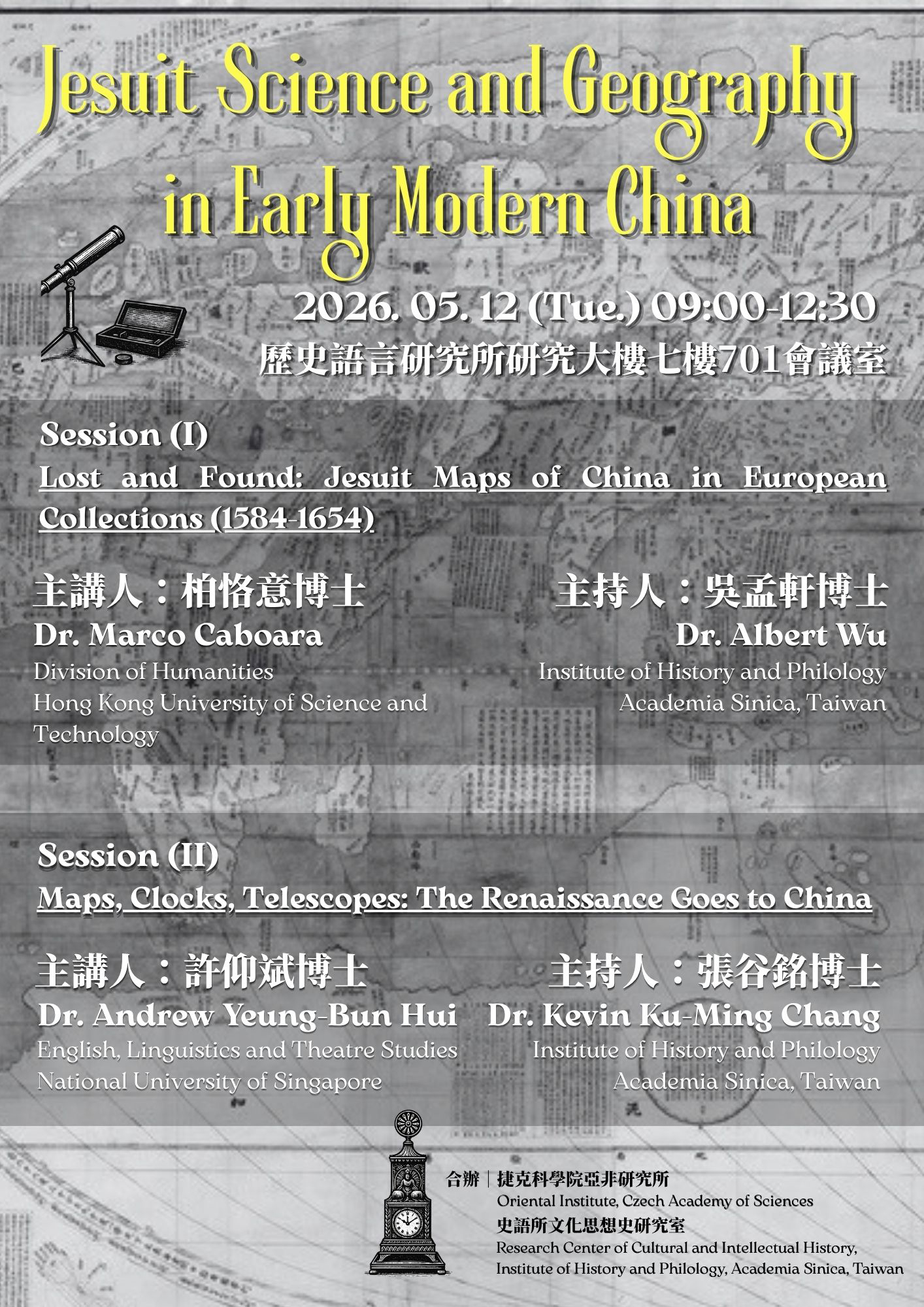
講者:Marco Caboara(柏恪意)博士(香港科技大學教授)、Andrew Hui(許仰斌)博士(新加坡國立大學英文、語言與劇場學系副教授)
主持人:張谷銘 博士(本所副研究員)
時間:2026年5月12日(二)09:00−12:30
地點:本所研究大樓七樓701會議室
合辦單位:捷克科學院亞非研究所、本所文化思想史研究室
演講摘要:
Session (I) “Lost and Found: Jesuit Maps of China in European Collections (1584-1654)”
Based on recent explorations in European libraries and Archives, I will present newly discovered or rediscovered maps and globes with new depictions of China produced by Jesuit mapmakers and Italian cosmographers between the late 16th and the early 17th century, the formative period of the European cartographic image of China and East Asia.
Session (II) “The Renaissance Goes to China: Matteo Ricci’s Projects and Transformations”
In 1583, the Italian Jesuit Matteo Ricci went to China and stayed there for the rest of his life. He was one of the first missionaries to embark on the great impresa—“enterprise”—to save souls for the Kingdom of God. Unlike in the Americas, the Europeans arrived in Asia with neither an army nor a navy, so what was their form of persuasion? Classical philosophy, as it turns out.
What did he introduce to China, and what did China compelled him to invent? This talk explores how Ricci tapped into his humanist education in Rome in order to find strands of commonalities and resonances in both ancient Chinese and Greco-Roman thought. By the end of his life, Ricci translated—and transformed—a staggering amount of Western knowledge for his Chinese readers: geometry, Stoicism, dialogues, a treatise on friendship, astronomy, cartography. Although Ricci has been intensively studied by sinologists and specialists of the Jesuit mission, he remains oddly marginal to the history of ideas; this talk argues that his China project should be understood as a major, but unrecognized, experiment in global humanism. The Renaissance did go to China, but China also changed the Renaissance.
(本演講以英文進行,無須事先報名)
近期學術活動
-
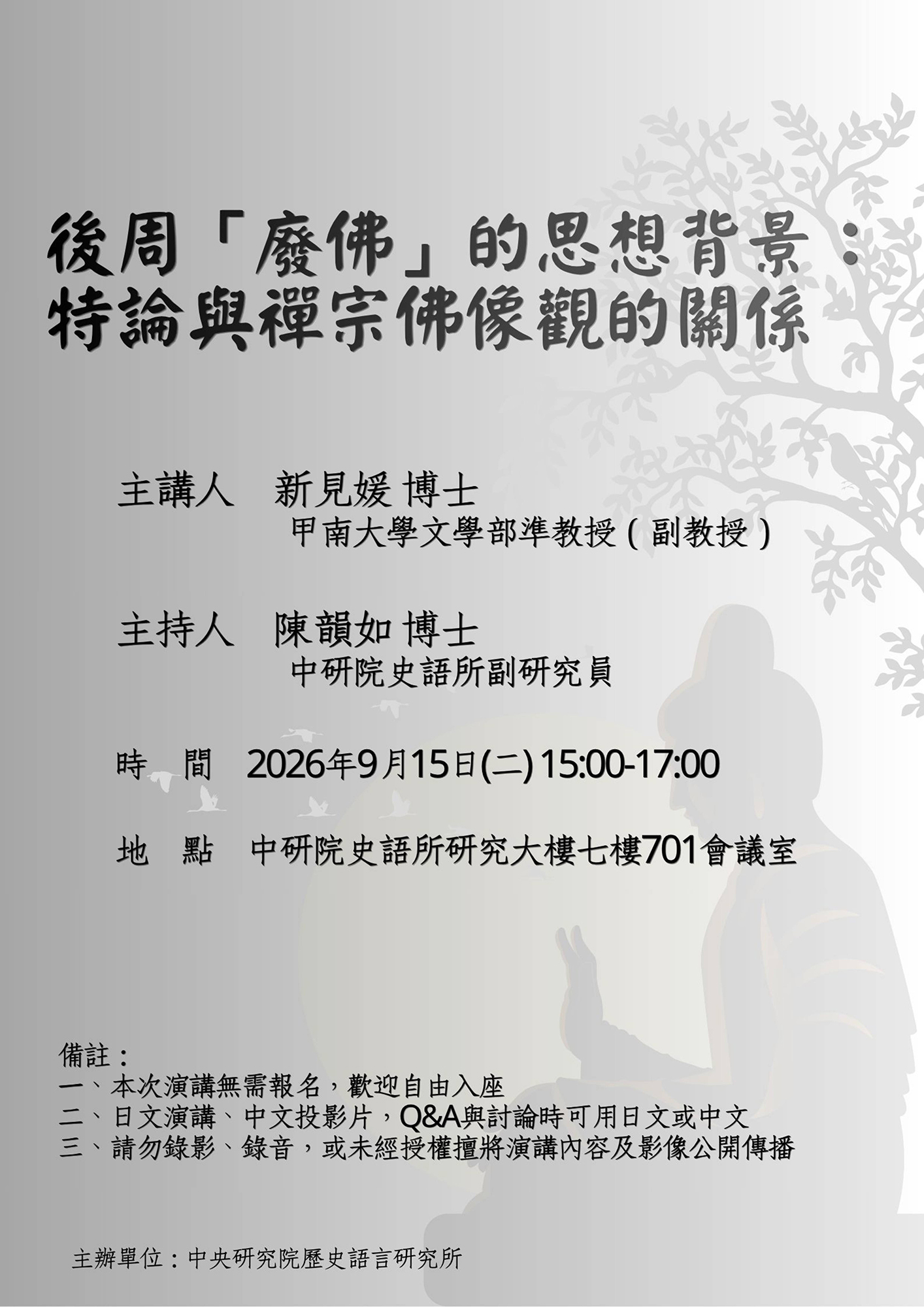
講者新見媛
後周「廢佛」的思想背景:特論與禪宗佛像觀的關係
時間2026-09-15
地點研究大樓701室
-
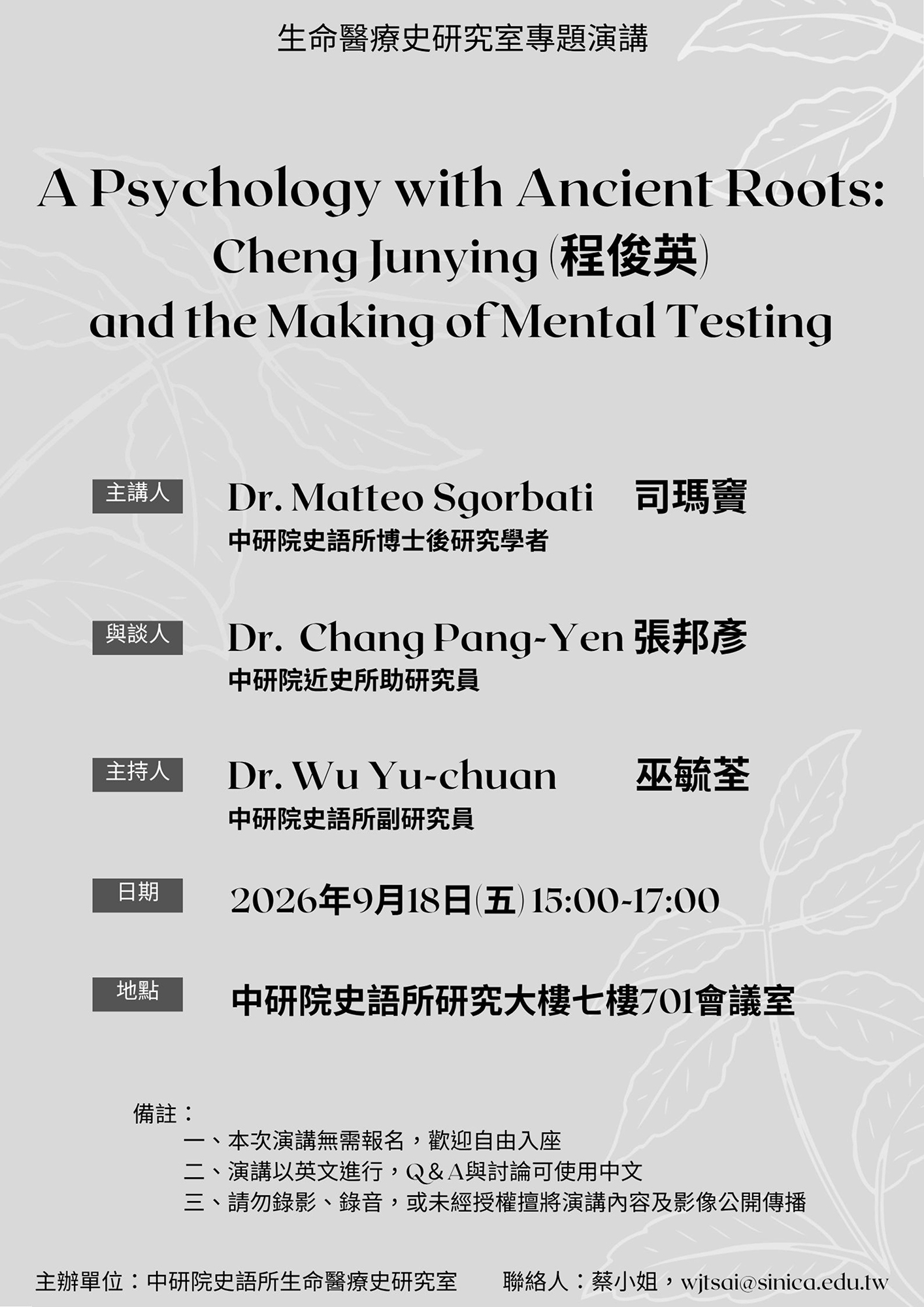
講者Matteo Sgorbati
A Psychology with Ancient Roots: Cheng Junying (程俊英) and the Making of Mental Testing
時間2026-09-18
地點研究大樓701室
-
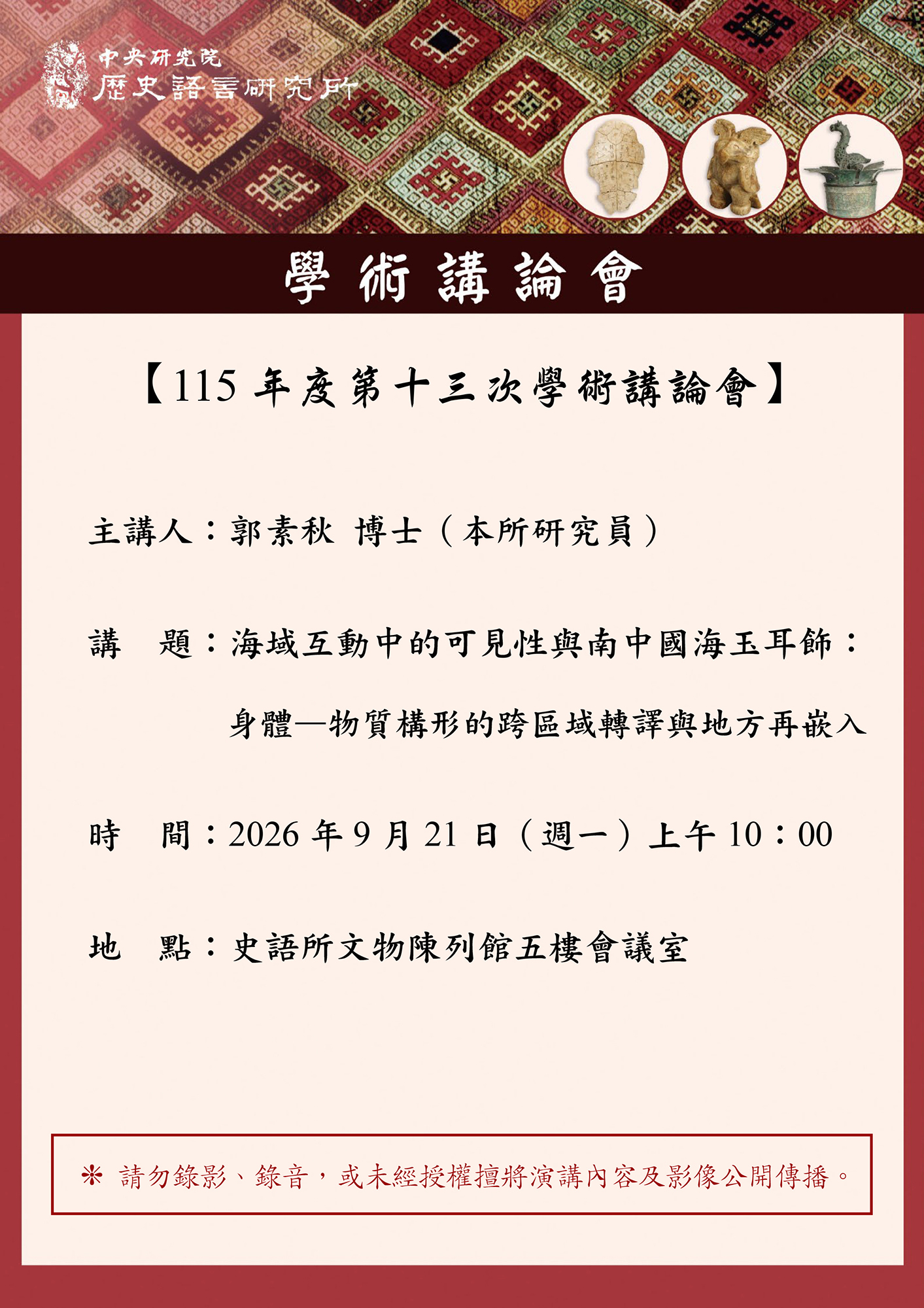
講者郭素秋
海域互動中的可見性與南中國海玉耳飾:身體—物質構形的跨區域轉譯與地方再嵌入
時間2026-09-21
地點文物館5F會議室
-
講者王錦萍
法裔之石:蒙元全真宗派與宗派圖碑
時間2026-09-23
地點文物館5F會議室
-

講者
「臺灣濱海社群的環境適應、人群活動與資源利用:從史前到當代的探索」工作坊
時間2026-10-08
地點研究大樓704室