
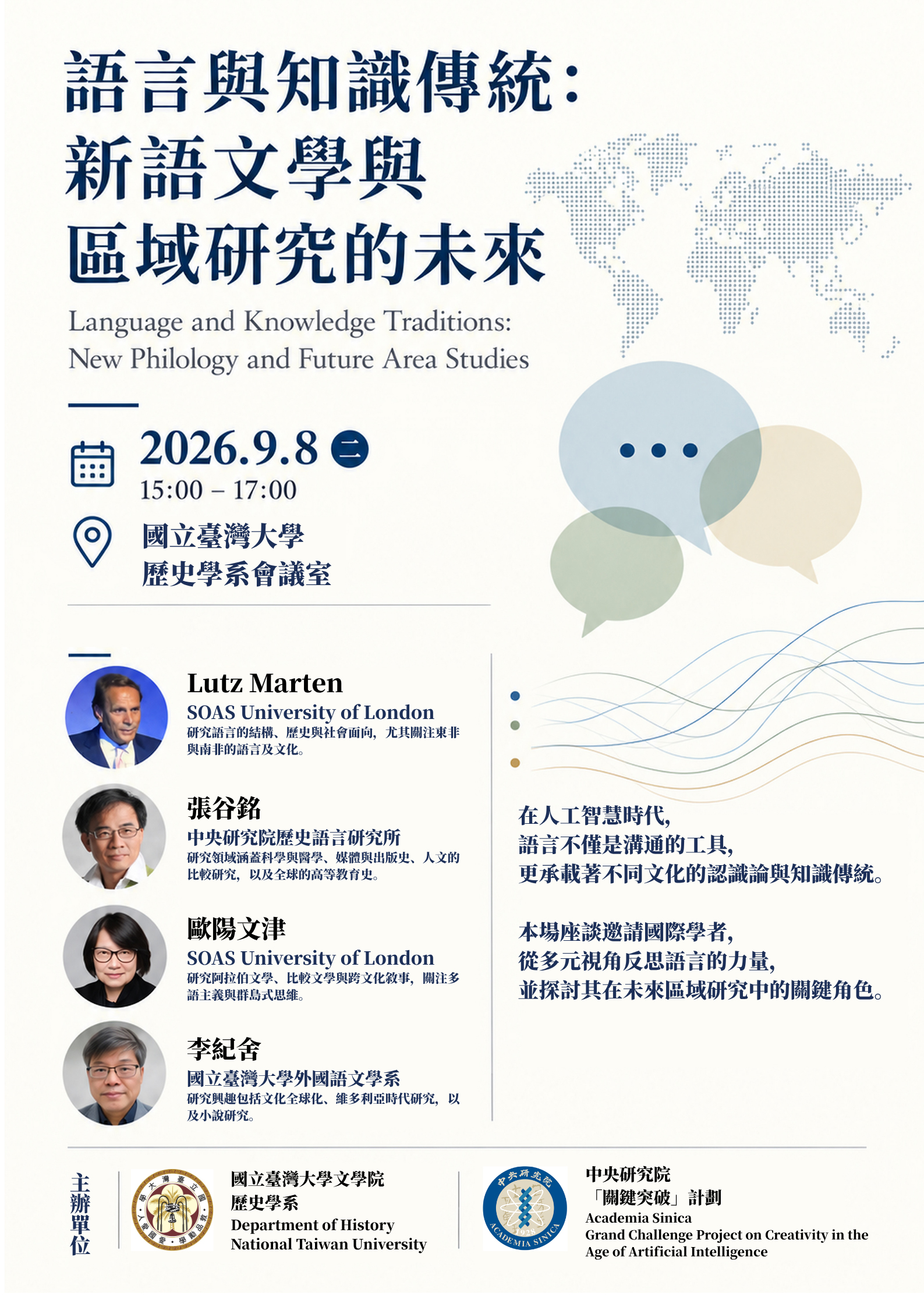
Language and Knowledge Traditions: New Philology and Future Area Studies
Speaker:
Kevin Chang, Associate Research Fellow, IHP, Academia Sinica, Taiwan
Chi-she Li, Professor of Department of Foreign Languages and Literatures, NTU
Lutz Marten, Professor of General and African Linguistics at SOAS University of London.
Wen-chin Ouyang, Academician, Professor of Arabic and Comparative Literature at SOAS University of London
Time: 8 September 2026, 3-5 pm
Location: History Department Conference Room, NTU
Organizer:
Department of History National Taiwan University
Academia Sinica Grand Challenge Project on Creativity in the Age of Artificial Intelligence
URL: https://history.ntu.edu.tw/web/news/news_in.jsp?lang=tw&np_id=NP1788312349409
Abstract:
The growing multilingualism among people and environments around the world, the concomitant loss of global linguistic diversity, and the proliferation and ascendance of AI in our life have transformed our engagement with language, knowledge and creativity. As they put under pressure many of our activities, including language learning and teaching, and language-related research and publication, they also make a compelling case for the immediate relevance of language in every aspect of our life as we move into the second quartile of the twenty first century when different parts of the world have become even more entangled and connected in complex ways. Language is not only vocabulary and grammar, communication and culture but also epistemology and knowledge tradition. How we situate ourselves in and engage with the world is inextricably reliant on our mastery of the various epistemologies and knowledge traditions inherent in languages.
The History Department with the College of Liberal Arts at the National Taiwan University and the Office for Cultural and Intellectual History in the Institute of History and Philology at Academia Sinica are delighted to co-host a panel of international scholars of world languages, cultures and literatures to reflect on the role languages can continue to play to foster global understanding in the age of AI.
Lastest Events
-
Speaker
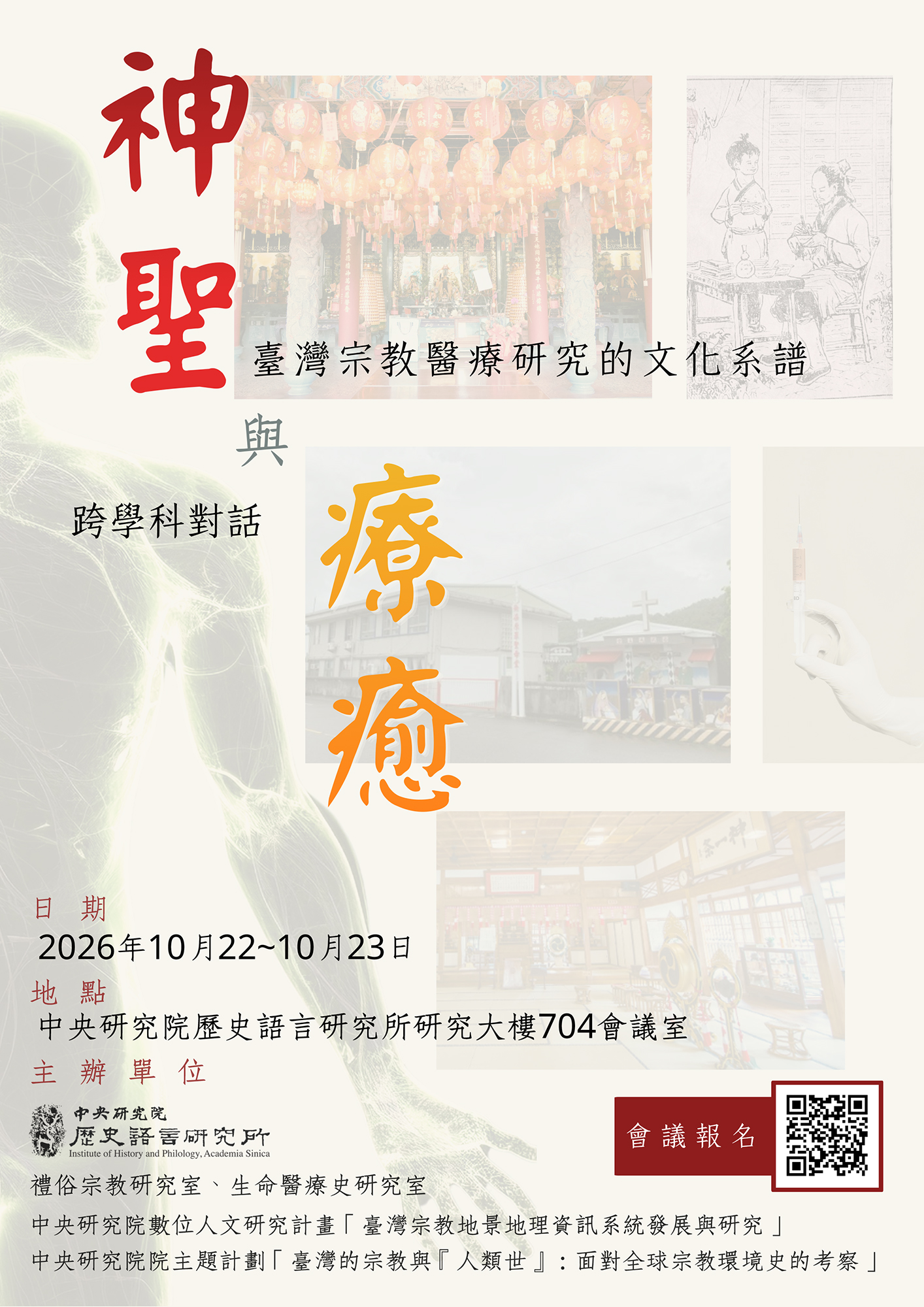
Healing and the Sacred: Cultural Genealogies and Interdisciplinary Dialogues in the Study of Religious Healing in Taiwan
Time2026-10-22
Location研究大樓704室
-
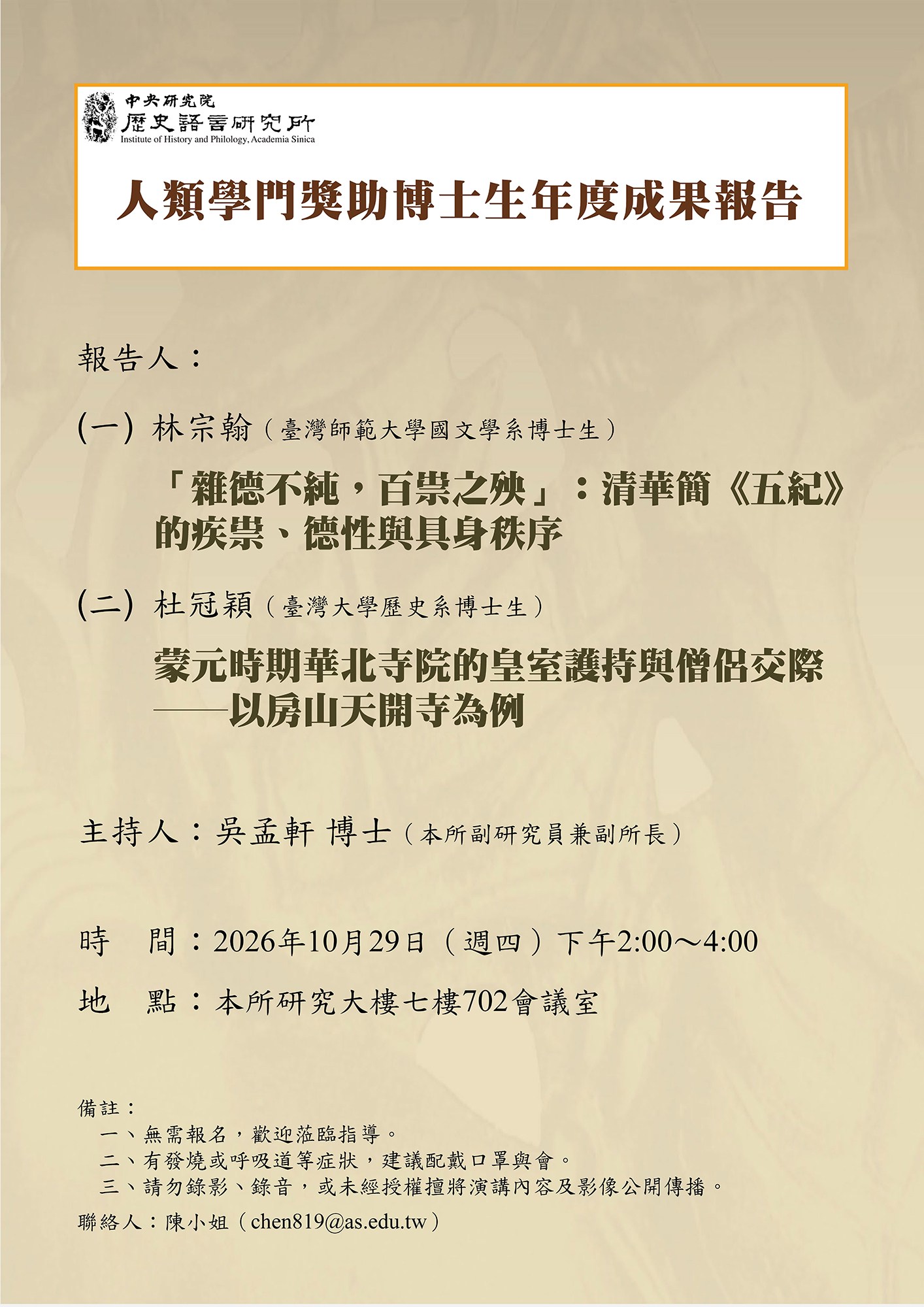
Speaker林宗翰、杜冠穎
Annual Final Presentation for Recipients of the PhD Scholarship in Anthropology
Time2026-10-29
Location研究大樓702室
-
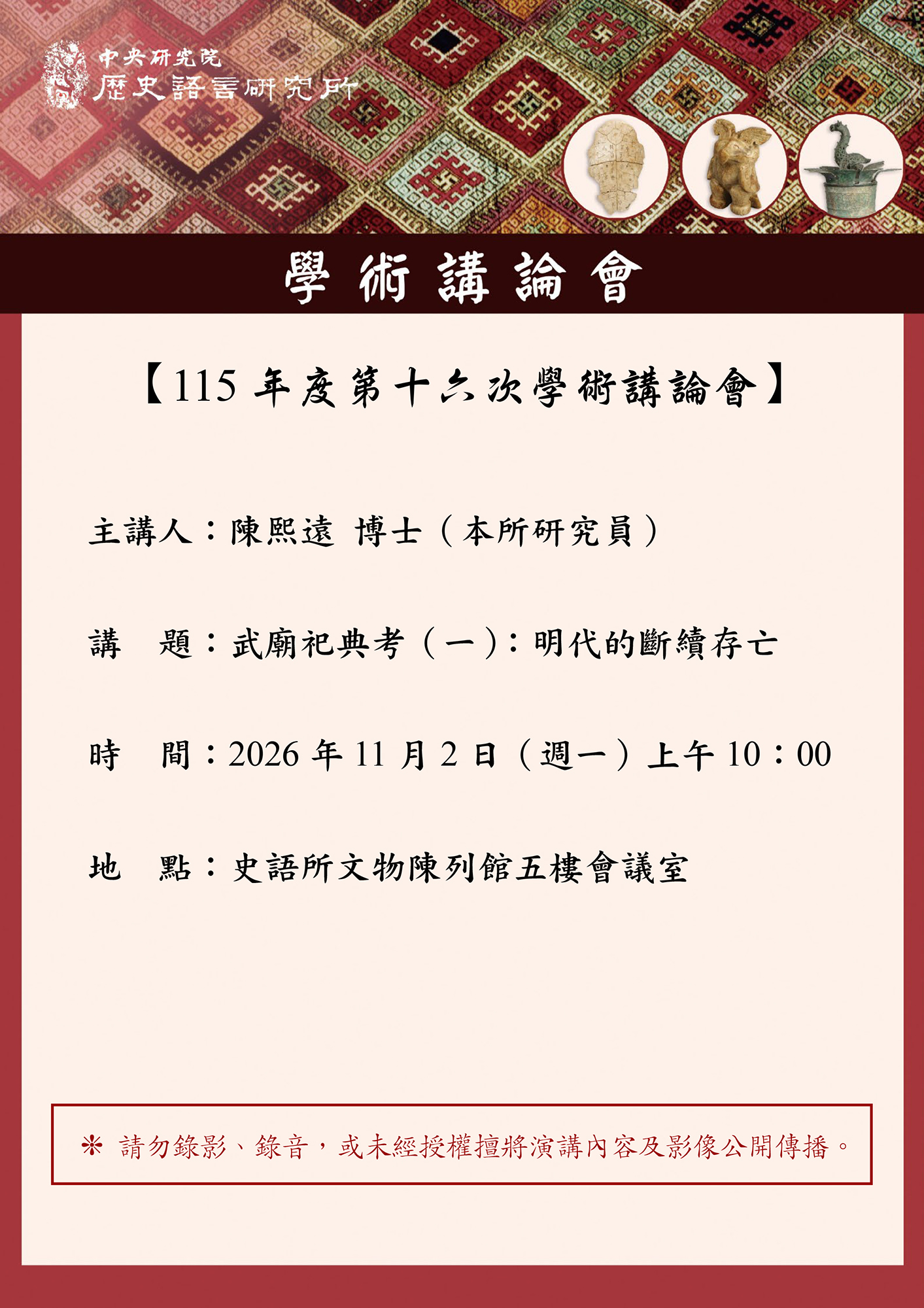
SpeakerHsi-yuan Chen
Studies of the Martial Temple Cult (I): Discontinuity and Survival in Ming China
Time2026-11-02
Location文物館5F會議室
-
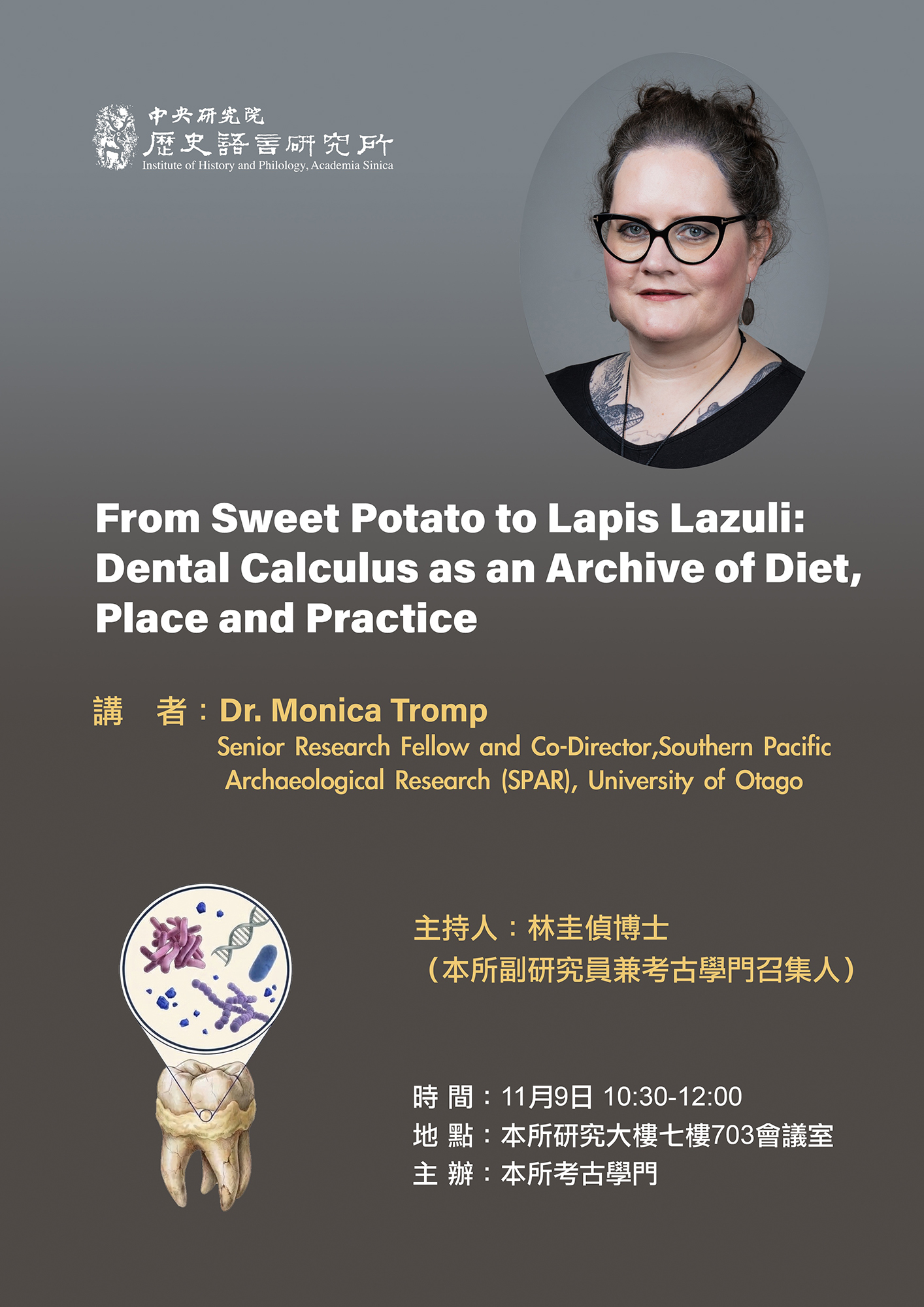
SpeakerMonica Tromp
From Sweet Potato to Lapis Lazuli: Dental Calculus as an Archive of Diet, Place and Practice
Time2026-11-09
Location研究大樓703室
-
Speaker
The Taste of Time: Interdisciplinary Approaches to Fermented Food
Time2026-11-11
Location文物館B1演講廳


