
A Global Perspective on the International Order of Asia from the 1930s to the 1950s

講 者:秋田茂 博士(日本大阪大學榮譽教授)
講 題:A Global Perspective on the International Order of Asia from the 1930s to the 1950s
主持人:張谷銘 博士(本所副研究員)
時間:2026年9月3日(四)15:30−17:30
地點:本所研究大樓七樓701會議室
主辦單位:本所文化思想史研究室
協辦單位:本所世界史研究室
演講摘要:
After the Second World War, the formation and development of the Cold War regime (East–West divide) and the progress of decolonization in Asia and Africa (South–North divide) were symbolized as two key factors of the new international order. This “Cold War-decolonization dichotomy” is not appropriate for the study of the postwar international order of Asia because newly independent Asian countries had to show that their new political regimes (governments) resulted in economic benefits through economic development and industrialization. This third factor, “development,” might have historical connections with the prewar 1930s through the evolution of intra-Asian trade or trans-regional trading networks in Asia.
In this paper, the author uses the term “Asia” to cover a wide geographical space, including East, Southeast, and South Asia, which might be collected under a new mega-regional concept of “Eastern Eurasia.” This wide space in the 1930s was composed of several national empires, colonial empires, and independent sovereign states, such as the Republic of China and Thailand. The dominant territorial components were two colonial empires: the British Empire and the Japanese Empire. However, these legal or formal units of colonial empires and states interacted economically and were intimately connected with each other. The recent development of “transimperial history” reveals these kinds of dynamic transactions or connections as representative aspects of global history. In particular, this chapter analyzes economic and financial interactions and relationships beyond the territorial borders of empires, or informal influences.
Why was Asian economic development (industrialization) able to start in the 1950s and early 1960s? This paper attempts to consider this question by focusing on several international economic aid schemes, such as the Colombo Plan in the 1950s, the Aid-India Consortium from 1958, and the “developmentalism” of East and Southeast Asian countries in the 1950s and early 1960s, which have contributed positively to the economic independence of Asian countries and accelerated economic development and industrialization. Independent India under the Nehru administration played an important role in the Commonwealth of Nations as well as in the Colombo Plan in the 1950s and early 1960s. Indian development policies were closely linked to India’s holding of sterling balances and economic aid from various countries and international institutions, including the World Bank. On the other hand, East Asian economic development through industrialization was related to the Cold War regime and US economic aid. These developing countries adopted developmental policies of their own initiative and carried out “developmentalism.” Using multi-archival documents, this chapter reconsiders the international order of Asia in the 1950s and early 1960s and reveals some key elements of continuity before and after the Asia-Pacific cataclysm of 1937-45 in the context of global history.
(本演講以英文進行,無須事先報名)
近期學術活動
-

講者
「臺灣濱海社群的環境適應、人群活動與資源利用:從史前到當代的探索」工作坊
時間2026-10-08
地點研究大樓704室
-

講者蔡瑩瑩
水戰的三種記憶:圖像、古書與竹簡所見春秋戰國的南北互動
時間2026-10-08
地點研究大樓702室
-
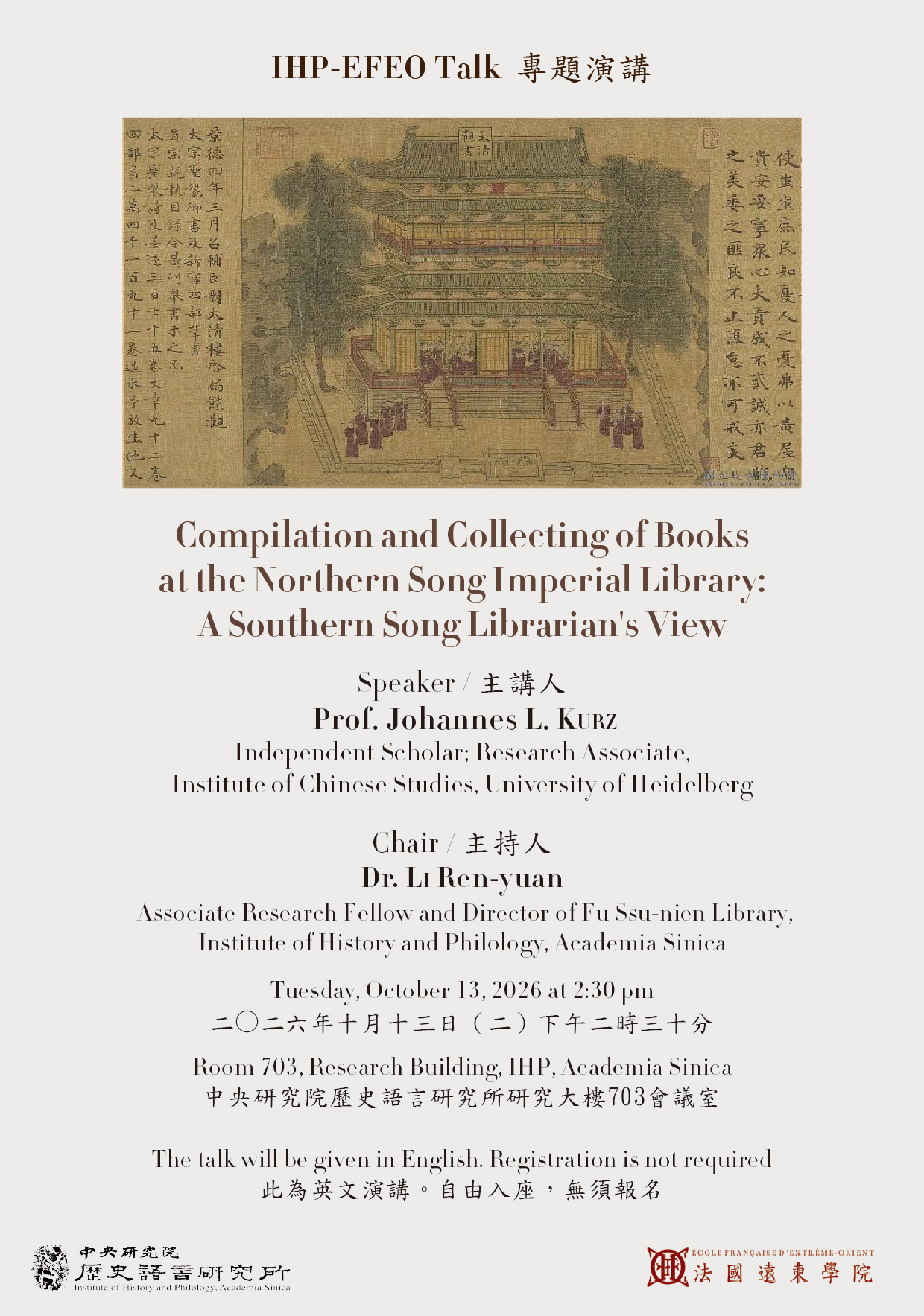
講者Johannes L. KURZ
Compilation and Collecting of Books at the Northern Song Imperial Library: A Southern Song Librarian's View
時間2026-10-13
地點研究大樓703室
-
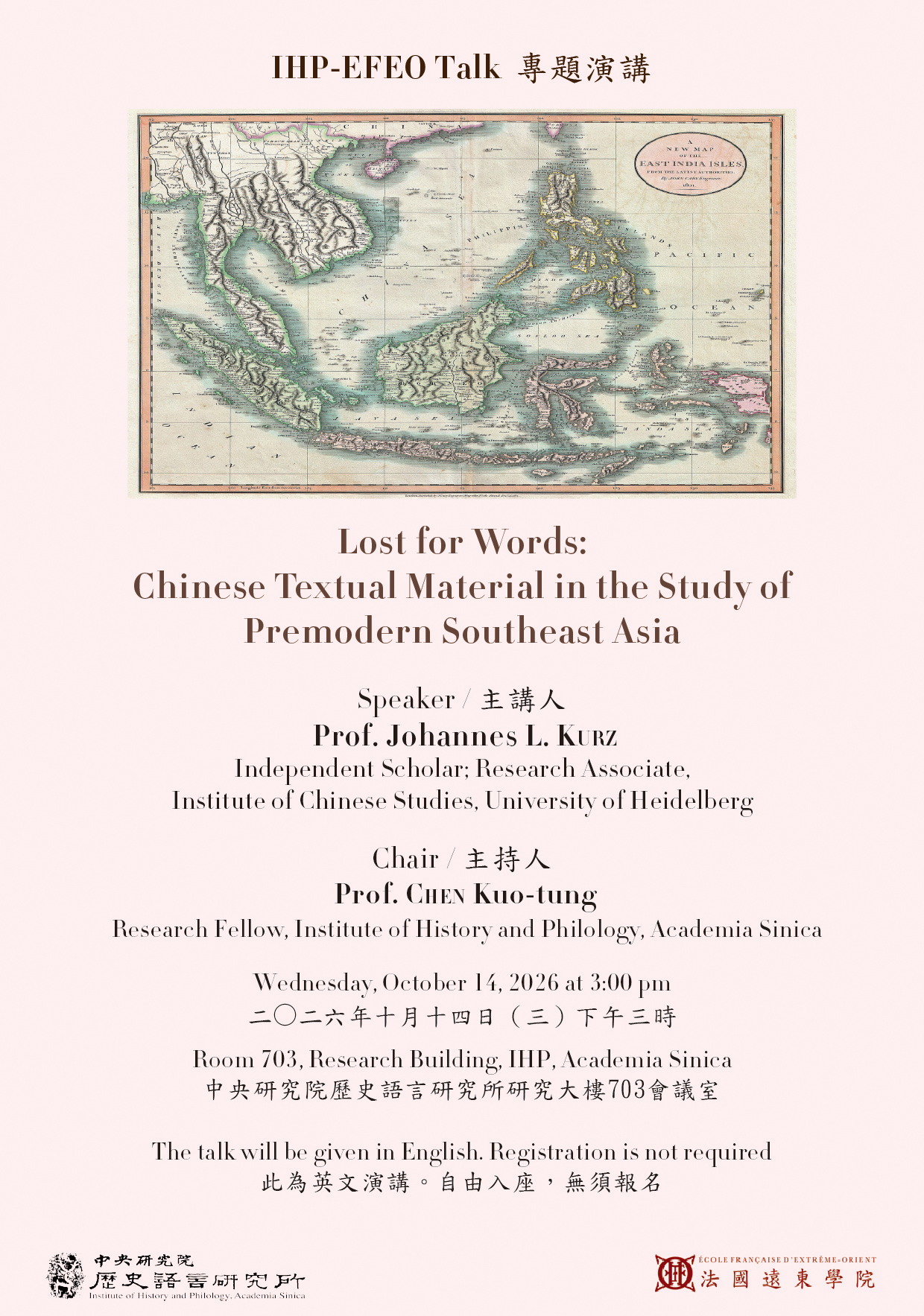
講者Johannes L. KURZ
Lost for Words: Chinese Textual Material in the Study of Premodern Southeast Asia
時間2026-10-14
地點研究大樓703室
-
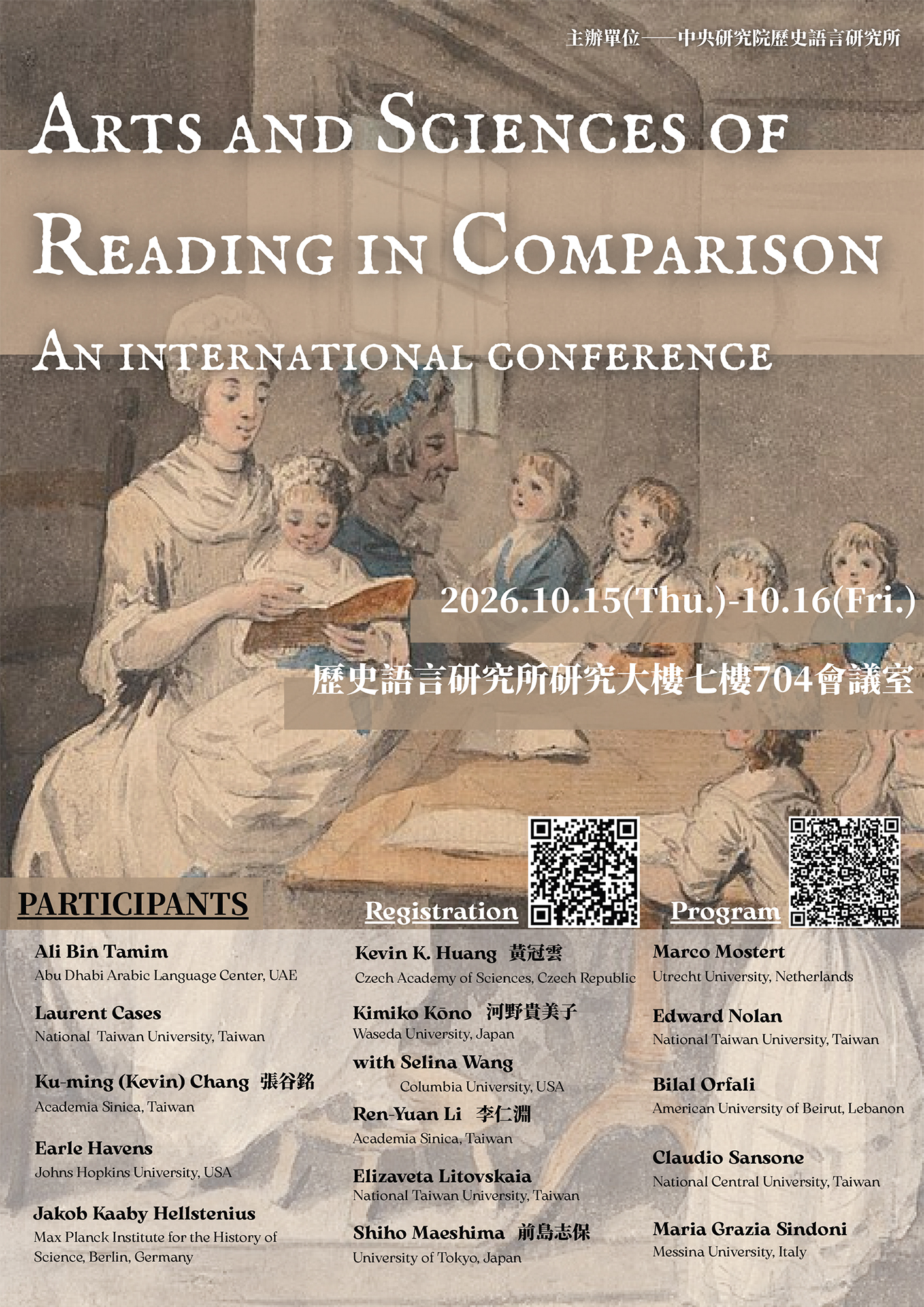
講者
Arts and Sciences of Reading in Comparison: An International Conference
時間2026-10-15
地點研究大樓704室
-
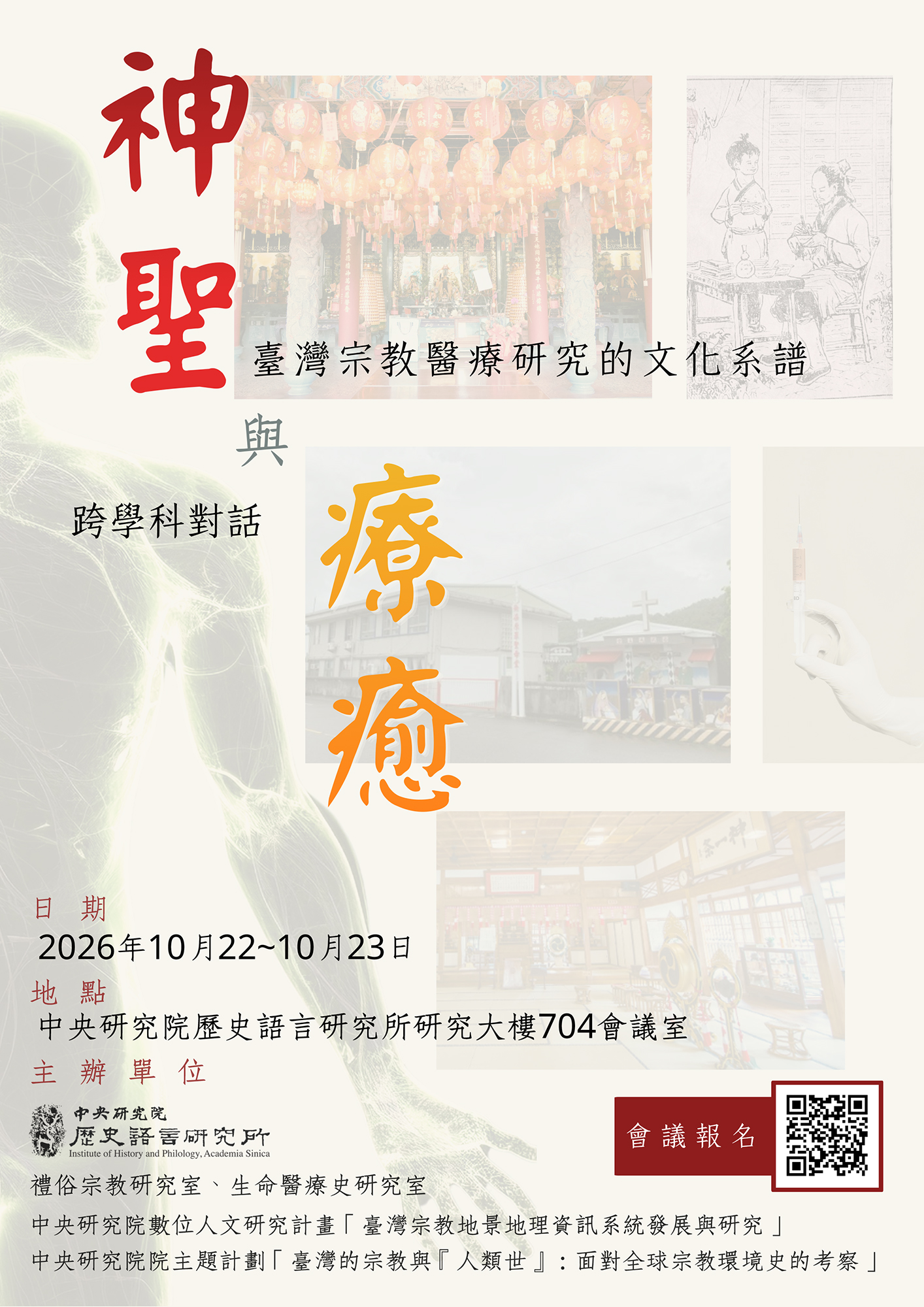
講者
「神聖與療癒:臺灣宗教醫療研究的文化系譜與跨學科對話」學術研討會
時間2026-10-22
地點研究大樓704室
-
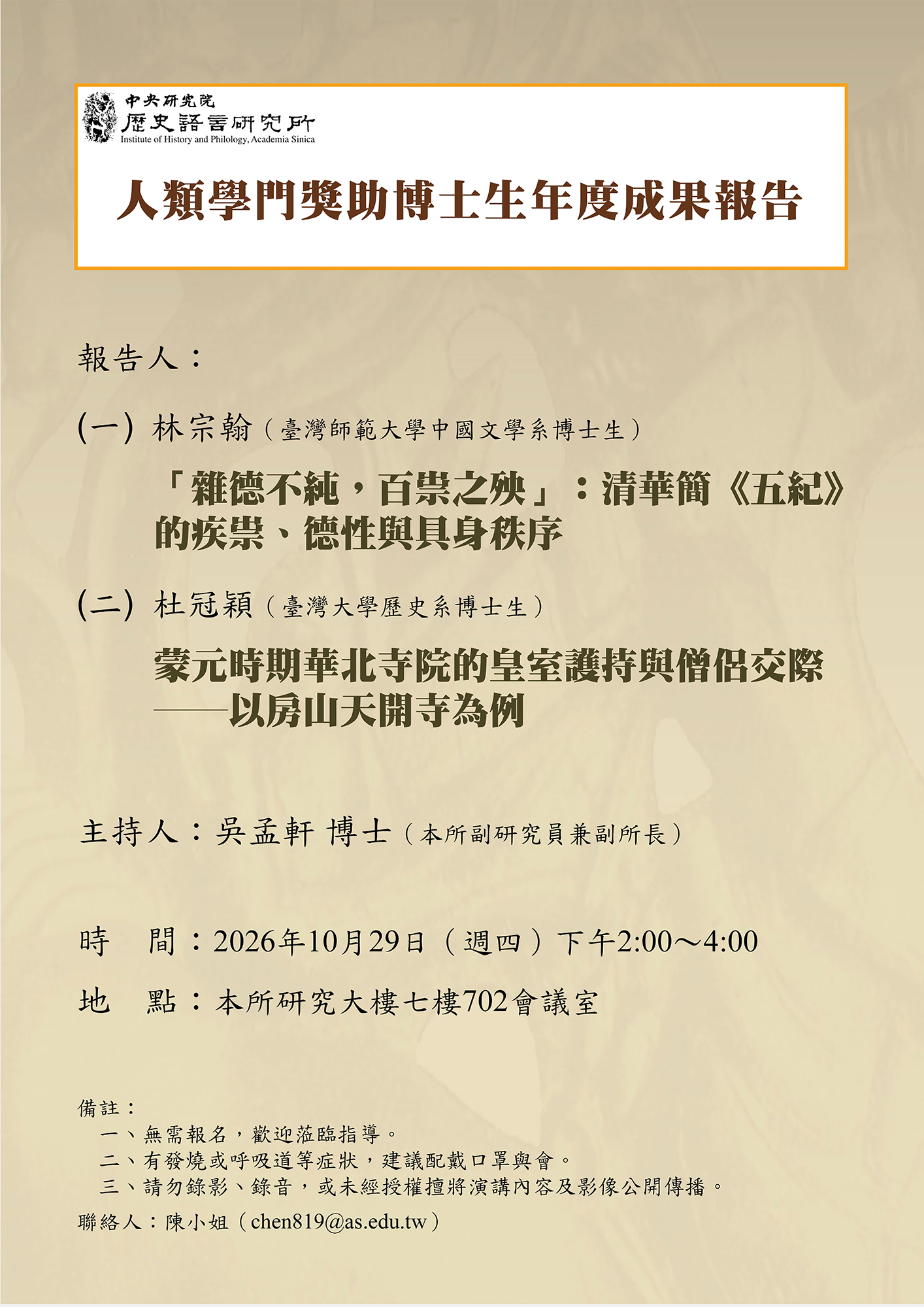
講者林宗翰、杜冠穎
人類學門獎助博士生年度成果報告
時間2026-10-29
地點研究大樓702室